
Holy vs. Common
While leading His people out of Egypt to the Promised Land, God distinguished between what was common and what was holy. It was the only way He, being perfectly holy, could dwell among His people. This week, we begin a 2-part series on God’s requirements of Israel’s priests and His Chosen People, which shape our understanding of holiness, responsibility, and spiritual leadership.
The priests were essential to help Israel maintain the holy/common distinction. They provided moral oversight, mediated holiness, formed Israel’s spiritual identity, and taught its covenant with God. The modern Western world largely rejects such notions of absolute holiness and sanctification. Yet, God calls for believers to be holy today. It is a great challenge, as we live among rampant sinfulness. But because we are indwelt by the Holy Spirit and made new in our faith in Jesus, we are called to bear witness to the Holy One of Israel in all we do. Learn more about our calling from our holy God in this week’s broadcast!
Chris Katulka: Thanks for joining us for The Friends of Israel Today. I'm Chris Katulka, your host and teacher. Now, before we get to the program, I want to ask you a question. Have you been to foiradio.org? If you haven't, that's where you can connect with The Friends of Israel. Again, it's foiradio.org where we have nearly a decade, that's right, 10 years of content on our website that's full of insightful teaching about Israel and the Jewish people from a biblical perspective and various interview guests that will give you a great understanding of how to interpret the events that you're seeing happening in the Middle East unfolding actually right before your very eyes today. Again, that's foiradio.org. Now today we're going to start a new series, a two-part series where we're going to look at Leviticus 10:10-11. That's right, Leviticus. We're actually going to look at what I believe is a very influential passage in the Bible that often gets overlooked.
It's really the matrix through which the priests were to minister to the people of Israel and then how the Israelites were to respond. So we're going to look at Leviticus chapter 10 verses 10 and 11, and we're going to highlight this priestly matrix so that we can see really what we should be doing as believers as well in light of what we're learning from Leviticus.
But before we get to that, let's take a look at the news. Israeli airstrikes this week destroyed Iran's infamous “Israel doomsday clock” in Tehran, a symbol of the regime's vow to annihilate Israel. Unveiled in 2017 on Israel's Jerusalem Day, the clock displayed a Palestinian fist smashing an Israeli flag beside the words “time left before destruction of Israel.” Well, here's my take. What a symbolic turn of events. The doomsday clock that once marked Israel's destruction in Tehran was destroyed by the Jewish state. Well, there's another countdown clock going on right now and it's ticking very loudly for the end of the Ayatollah and his deadly regime, bringing an end to his genocidal reign and the deadly influence he's had on the world.
Chris Katulka: We're beginning a two-part series on Leviticus 10:10-11, two foundational verses in the Old Testament that really offer us a clear window into what God required of Israel's priests, his Chosen People, and ultimately what Jesus emphasized in his ministry to the people of Israel. These verses are not only instructional but deeply biblical and theological in shaping how we understand holiness, how we understand responsibility and even spiritual leadership. Now before we dive into Leviticus chapters 10, and we're going to be looking at 9 through 11 as well. We'll start with verse nine. Let's step back and set the context. At the end of Exodus, something remarkable happens, A holy God descends to dwell among his people in the tabernacle. As Exodus 25:8 tells us, God says to Moses, he instructs him to “build a tabernacle, a sacred space so that I may dwell among them,” his people.
That statement alone should capture our attention. The holy Creator of the universe desired to dwell not just near but with his people. However, this kind of presents a major tension. How can a holy God live among an unholy people or perhaps more accurately a common people? See, this is the tension that Leviticus begins to resolve. The tabernacle, or as it's also called the tent of meeting, was carefully arranged to mediate that very problem, to allow the holy to reside among the common without consuming them. God instituted the priesthood to stand in the gap. Now, let's read that passage together. Leviticus chapter 10. We're going to start in verse nine and we're going to go through 11 and listen to what it says. “You and your sons are not to drink wine or other fermented drink whenever you go into the tent of meeting or you will die. This is a lasting ordinance for the generations to come so that you can distinguish between the holy and the common, between the unclean and the clean and so that you can teach the Israelites all the decrees the Lord has given them through Moses”. So as we begin this series, we'll be spending today unpacking the holy and common distinction that was mentioned, and next week we'll take a deeper dive into the clean and unclean components of these verses. These distinctions might feel kind of foreign to our modern minds, but they hold timeless spiritual truths, especially as we reflect on how Jesus, our great High Priest, fulfills these categories perfectly and calls us into a holy priesthood. According to 1 Peter 2:9, this charge comes at a critical moment. Let's go back for a moment in Leviticus chapter eight and Leviticus chapter nine, Aaron and his sons are ordained for the priesthood, but no sooner do they step into that sacred role, then tragedy strikes.
In Leviticus 10:1-2, Aaron's sons, Nadab and Abihu, they offer to God an unauthorized fire and were told that they acted improperly, maybe because they were under the influence of alcohol, as verse 9 might imply. Regardless, they approached God flippantly and his holiness consumed them. God makes a powerful point through this event. Even those who are set apart as holy, they cannot approach God carelessly. See, his holiness is not to be taken lightly. That's why he immediately follows their judgment with a charge to Aaron and his remaining sons, Eleazar and Ithamar, to stay sober and diligent in their duties, especially when they are entering into the tabernacle. See, this sets the stage for verses 10 and 11. That's why I wanted to read verse 9 to get that in there to show you maybe the reason why Nadab and Abihu offered a strange fire. Maybe it was because they were influenced by alcohol. But nonetheless, this crystallizes one of the priesthood's core responsibilities: discernment. Priests were not only to perform sacrifices, that's where our minds often go, but they were also to educate the people of Israel. They were supposed to help the Israelites distinguish between the things that were holy and common and between the things that were unclean and clean. And these categories, they're not just mere symbolism, they were essential to preserving God's presence among his people. So let's pause for a moment to clarify these terms. In Leviticus, “holy” in Hebrew, kadosh, means to be set apart, set apart for God. It applies to places like the tabernacle being set apart and holy for God. There were certain times that were set apart and holy to God, like Sabbath. Objects were set apart and made holy to God, like the areas where sacrifices were offered and even people could be made holy to God like the priests or the nation of Israel itself. So that's kadosh, holy.
Now, on the other side is “common.” In Hebrew, it's chol. And it refers to the ordinary everyday realm. Not sinful, it doesn't have to be sinful or bad, but it's just not set apart. Common things can be made holy and holy things can become common if they aren't treated properly. There's another axis at work here too, clean and unclean. And this refers to a ritual status, often temporary and related to bodily conditions like food, the food that you eat or the contact that you have with certain objects. Only someone who is both holy and clean, think about this, only someone who is holy and clean can enter into the sacred space and offer sacrifices. That means holiness and cleanliness intersect in very important ways.
So let me offer you an illustration here. I want to take you back to geometry class, okay? Don't worry, I'll make it painless. Imagine the Y axis. Remember learning this? The Y axis as a vertical line ranging from common at the bottom and holy at the top, and the X axis as the horizontal line ranging from unclean on the left to clean on the right. The priests were to help the people navigate life within this coordinate plane, helping them know what belongs where and how to move from one category to another, and most importantly, how to approach God properly so we don't end up with a Nadab and Abihu situation again. See, the priests were teachers. They weren't just officiants, they were guardians of the knowledge and interpreters of God's will. Their job was to teach the people what was holy and what was common and what was clean and what was unclean and how to live accordingly. Their instructions would shape Israel's understanding of worship and morality and identity and community.
In that light, Leviticus 10:10-11 highlights those four essential aspects of priestly ministry. First, I want to say something, moral oversight. You see, the priests were not merely ceremonial officials, they were spiritual guides that were entrusted with interpreting and applying God's Word to daily lives of the people, the people of Israel. God commanded them to teach the Israelites all the decrees the Lord had given them through Moses (Leviticus 10:11), and this teaching role meant they had to study. It meant they had to understand and communicate God's law clearly. They were to help the people discern between acceptable and unacceptable worship, between obedience and rebellion, and between purity and impurity. The moral dimension of their teaching wasn't abstract. It impacted a lot in life. It actually impacted your diet. Whether the food you ate was kosher or your family relationships in Leviticus chapter 18 or justice that would come down or how we would love one another and the justice that would come through that, or even right down to business ethics.
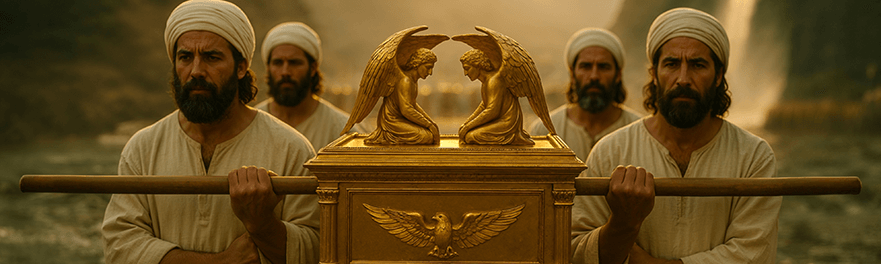
Another thing is mediating holiness. One of the primary responsibilities of the priest was to guard the boundaries between holy and common. In the tabernacle system, even physical objects were set apart as holy. And priests had to ensure that they were used properly and not profaned. The priest's mediation was not only ceremonial, it was deeply biblical and theological. Their service upheld the sacredness of God's presence. Improper handling of the holy, again, like Nadab and Abihu, the strange fire, would bring swift judgment. Their actions illustrated an essential truth: God is not casual about his holiness. Let me say that again, God is not casual about his holiness. Again, the priests were also called to help Israel form their identity. Leviticus chapter 10:10-11, it implies that Israel's spiritual identity was shaped through education. The priests taught the people what it meant to be distinct and separate and holy from the other nations.
See these categories of holy and common, they weren't just about ritual, they formed the national identity. Israel was to become “a kingdom of priests and a holy nation,” as Moses said in Exodus 19:6. A people who reflected the character of their God to the world. So through a sacred calendar with festivals and sacrifices and sabbaths, the priests led Israel to see themselves as God's possession. Holiness was not simply something to be observed from a distance. For Israel, it was to be embodied. It was the priest's job to orient the people of Israel toward holiness.
And finally, it was the priest's job to teach the covenant. See, the command to teach the Israelites all the decrees, according to Leviticus 10:11, was generational. See, the priests were not just educating adults, they were to ensure that the children too understood the ways of the Lord. This education was built into Israel's covenant life. You can read about that in Deuteronomy 6. And the priests were vital in modeling and communicating God's Word consistently. See, they functioned as both scholars and shepherds, interpreting the law and helping people live it out. Their role in festivals and purification rights and community judgments created regular opportunities to explain God's expectations, and yes, his grace as well. See, Leviticus 10:10-11 is not just an ancient instruction, it's actually an invitation into reverence and discernment and a deeper understanding of what it means to live as a people set apart for God. These verses are going to lie at the heart of Israel's priesthood, laying the foundation for a life of discernment, instruction and holiness. See, the priests were not only the mediators of sacrifices, but the teachers of what it meant to live rightly in relationship with the holy God.
Their primary role was to help Israel understand the profound difference between what was holy: set apart for God, and what was common: ordinary and untouched by the sacred. This ancient responsibility, though rooted in the Levitical system, echoes powerfully into the present for followers of Jesus. See, today we live in a world that has in large lost its categories of holiness. See, right here in North America and Europe, we inhabit deeply secular cultures. The modern western world exalts personal freedom, subjective truth and moral ambiguity. The concept of something being holy, set apart, pure or sacred is foreign and even offensive. Yet this is exactly the context where the church is called to shine, and that's exactly what we're going to talk about when we return. So stick around.
Steve Conover: Chris, we've been blessed to add some new radio stations recently and I'm sure we have some who don't know much about The Friends of Israel Gospel Ministry.
Chris Katulka: Yeah, Steve. For years The Friends of Israel has been a trusted source for those seeking to understand God's heart for the Jewish people. We're excited to invite new listeners into our growing community. We're offering a free digital download of our popular booklet, Whose Land is it Anyway? This booklet explores the historical, legal, and biblical claims to the land of Israel, providing clarity on a complex and often misunderstood topic.
Steve Conover: It's a great resource. If you've ever wondered about the ongoing struggle in the Middle East and want to be able to understand and defend why God has given the Holy Land to the Jewish people, this is the resource for you. We want to equip you to understand and support the Jewish people, not based on mere opinion, but based on God's trustworthy and unchanging Word. To get your free digital copy of Whose Land is it Anyway?, visit foiradio.org. That's foiradio.org.
Chris Katulka: Welcome back everyone. We're knee deep in the study of the Levitical matrix. That's right where the priests were given the instructions from God to teach the Israelites to distinguish between that which is holy and common and that which is clean and unclean. But what does that mean for us today? Jesus prayed a prayer in John 17:15-16 where he says, “My prayer is not that you take them out of the world, but that you protect them from the evil one. They are not of the world even as I am not of the world.” This simple but profound statement from our Savior frames the Christian life. We are in the world but not of it. And see, like the Israelite priests of Leviticus, we live surrounded by common things, but we are not called to blend in. We are actually set apart as believers in Jesus.
The secular world around us is not just indifferent to God's holiness, it's often antagonistic to it. Biblical truth is labeled outdated. Moral clarity is replaced with moral confusion. Holiness is mistaken for judgmentalism. But it's into this very world that God sends us, not to condemn it, this is what I want to get across here, not to condemn the world, as Jesus said, but to bear witness to the Holy One of Israel through our lives, our words and our love. The call to holiness might seem like a daunting task, especially when we reflect on the strict demands placed on the priests in Leviticus. But the beauty of the gospel is that we are not holy because of what we've done, we're holy because of what Christ has done for us. Through faith in Jesus, we are united with the One who is perfectly holy. Jesus is our great High Priest. That's from Hebrews 4:14.
The One who not only entered the most holy place once and for all, but who also made us holy by His blood. That's Hebrews 10:10. And now by his grace, his spirit indwells us, setting us apart to serve the living God. See, as Paul says in 1 Corinthians 6:19-20, Paul says, “do you not know that your bodies are temples of the Holy Spirit who is in you? You are not your own. You are bought at a price, therefore, honor God with your bodies.” See, the indwelling of the Holy Spirit is in some way our own priestly ordination. We're now a royal priesthood, as the apostle Peter says in 1 Peter 2:9. Not because of rituals or a bloodline like Aaron and his sons, but because of grace and because we are holy, we are called to live holy.
In the previous segment of the program, I shared that Leviticus 10:10-11 reminds us that part of the priesthood's job was instruction. They didn't just offer sacrifices, they educated the people about the holiness of God. And in the same way, Christians today are not merely passive recipients of grace, we are called to orient others to the Holy One. Look, it's not our job to make others holy. Let that sink in when you look at the world around you and you're raising your kids or you're ministering to your friends, remember something, it's not your job to make them holy. That's God's work alone, accomplished through the convicting power of the Spirit and the cleansing blood of Jesus. But we can point them to Him. We can show them holiness is not legalism or self-righteousness, but life joy, peace and intimacy with a God who loves them.
See, in a culture that confuses the common with normal and the unclean with acceptable, the church must be a voice of clarity. We're not called to shout condemnation, but to speak truth in love and to live lives so saturated with the aroma of Christ that people see something different in us, something holy. So what does that look like practically? Well, number one, discernment. We must train our minds to distinguish between what is holy and common. Not everything that is permissible is profitable. Our media consumption, speech, attitudes and choices reflect the presence of the Holy Spirit. The next is our witness in our neighborhoods, our schools, our workplaces. We are holy outposts in a secular land. People may not read the Bible, but they will certainly read our lives. Holiness is not withdrawal, it is presence with purpose. It's a ministry of presence.
How about teaching? Like the priests of old from Leviticus, we have a role in educating the next generation, whether in the church, at home, online, we have countless opportunities to teach others the beauty of holiness and the grace that makes it possible. Humility. This is a big one. Our holiness is a gift, not an achievement. That truth should drive us to compassion, not to arrogance. We stand not above others, but alongside them, pointing to the One who can make all things new. So in a world that has lost its categories of sacred and profane or holy and common, we are called to reintroduce them, not through condemnation, but through a consecrated life. The church is the holy priesthood in a world today that is completely secular, and though we can't make people holy, can I tell you something? We can do exactly what the priests were called to do: point them to the One who can. Let's be that kind of people. Set apart, full of grace, and boldly orienting others to the holiness of God through Jesus the Messiah.
Hey, thanks so much for joining us for today's episode of The Friends of Israel Today. Don't forget to get your free digital download of our popular booklet, Whose Land is it Anyway? on our website, foiradio.org. Next week we’re going to wrap up our 2-part series. This week we looked at holy and common. Well, next we’ll look at that priestly matrix and see what it means to be clean and unclean. As mentioned, our website is foiradio.org. Again, that’s foiradio.org. Be sure to visit us there. Our mailing address is FOI Radio PO Box 914, Bellmawr, New Jersey 08099. Again that’s FOI Radio PO Box 914, Bellmawr, New Jersey 08099. You can call our listener line. That’s 888-343-6940. Again, that's 888-343-6940. Today's program was engineered by Bob Beebe. Edited by Jeremy Strong, who also composed and performs our theme music. Lisa Small is our executive producer. Sarah Fern is our associate producer. Steve Conover is our executive director here at The Friends of Israel Gospel Ministry. And I'm Chris Katulka, your host and teacher. The Friends of Israel Today is a production of The Friends of Israel Gospel Ministry. Passion for God's Word. Compassion for God's Chosen People.
FREE GIVEAWAY!
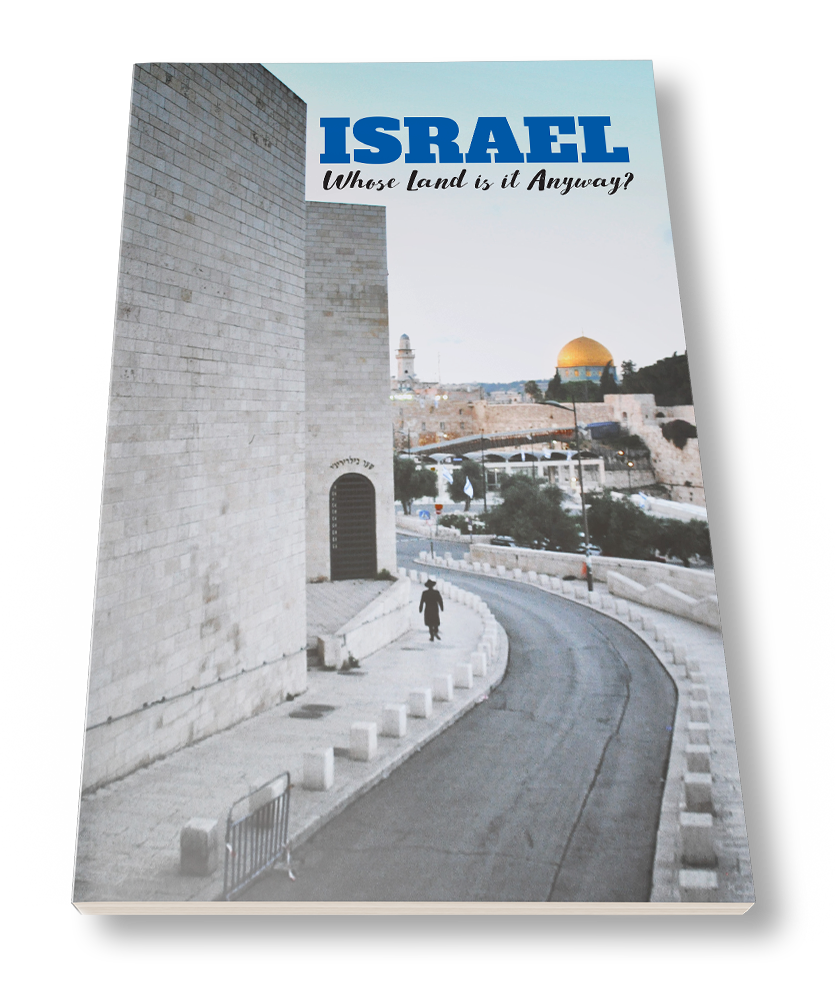
This booklet analyzes the Jewish and Arab claims to the land and makes sense of all the arguments surrounding the struggle. With historic, legal, and most importantly, biblical details about the land dispute, Israel: Whose Land Is It Anyway? will leave you with a clear, concise answer to how one should think about the land of Israel.

Music
The Friends of Israel Today theme music was composed and performed by Jeremy Strong.
We deeply appreciate your prayers and support!
Would you please consider making a donation to help us continue this vital work and to reach more lives with the biblical message of God's heart for Israel and the Jewish people?


