


How the New Covenant Impacts Believers
Because its people chased after other gods, Israel became an unfaithful bride to God. But instead of settling for a broken relationship, in His mercy God promised a New Covenant, ultimately fulfilled by Jesus. Now all people have access to a personal relationship with Him! As we wrap up our three-part series on the New Covenant this week, we discuss how the New Covenant impacts the life of a believer.
In part 1 of our series we analyzed the basis of the New Covenant, while part 2 dealt with Jesus’ establishment of the covenant through His death and resurrection. This week ties up the New Covenant with a reminder of the amazing blessings we have because of God’s work in reconciling us to Himself. This covenant helps us become transformed into His image, and it’s our responsibility to share this gift with others as we display the fruits of the Spirit to all.
Chris Katulka: Hi Everyone. I’m Chris Katulka, host of The Friends of Israel Today radio program. Did you know that August is Make-a-Will Month? It's a special time to reflect on your legacy and to take an important step for your future. According to recent studies, only 32% of adults in the United States have a will. Creating one brings peace of mind, it protects your loved ones and allows you to support the ministries that matter most to you. At The Friends of Israel Gospel Ministry, we want to help you and that's why we've partnered with FreeWill to offer a simple and secure way to write your legal will for free as our gift to you. When you include The Friends of Israel in your plans, you're leaving behind a powerful testimony of your passion for God's Word and compassion for God's Chosen People. It's fast, it's free, and it's a beautiful way to honor what God has placed on your heart. And if you remembered FOI in your legacy plans, let us know. We will be honored to include you in our FOI Heritage Society. Visit partner.foi.org to get started today. Make-a-Will Month. Your future. Your legacy. God's Glory. Again, that's partner.foi.org to get started today.
Steve Conover: Thank you for joining us for the Friends of Israel Today. I’m Steve Conover, executive director of The Friends of Israel Gospel Ministry. Every so often, we bring back past programs that continue to encourage. This is one of those episodes and we hope it’s a blessing to you.
Chris Katulka: Today, we're concluding our series on the New Covenant, and it's been such an important study because if you believe that Jesus is the Messiah of Israel and the Savior of the World, then you're saying that you're a part of a New Covenant community of believers bound together by the Spirit of God. And we know that Jesus ushered in this New Covenant, when on the night of the Last Supper, he said, concerning the cup that we take during Communion, "Drink from it, all of you. For this is my blood, the blood of the covenant that is poured out for many, for the forgiveness of sins. It's through the blood of Christ we find forgiveness and the promise and realization of the New Covenant in our lives." This is a study I hope that has opened your eyes to the fullness of the New Covenant, because the New Covenant wasn't something Jesus invented in the New Testament. The New Covenant was something that was promised by God in the Old Testament.
Now over the course of the past two weeks, we've really kind of studied the who, what, where, when and why of the New Covenant. The who of the New Covenant? Well, it's a promise that God made to the Jewish people and to Israel. But by God's grace, that promise of the New Covenant became a blessing to all who believe when Jesus ushered it in with his shed blood on the cross.
We studied the what. What is the New Covenant? It's a new way that God wants to interact with his people. No longer would Israel just look at tablets of the law with insincere obedience. Now the law would be placed on the hearts and minds of his people. Where sin was once etched on the hearts of his people, now the law would be written on their hearts.
And of course the why of the New Covenant. Why was this so important? Because of the issue of sin, not because the Old Covenant was faulty or broken, it was because of sin that the Old Covenant didn't work. The where, well, that's what's interesting, the where concept here. Because see, it was sin that kept Israel out of the land. The purpose of the New Covenant was so that God could keep his people in the promised land so that they could fulfill the divine purpose that God gave to them.
Finally, the when. And this is the ultimate question. When was the New Covenant ushered in? Well, it was ushered in at the death and resurrection of Jesus Christ, but is the New Covenant here in its completion, in its totality? Well, the King of the New Covenant has come. He's sitting at the right hand of the Father, but there's still sin in the world. The King isn't ruling from the earth, from Jerusalem as the prophets promise. Men still need to tell one another about God so that they might know him. In Jeremiah chapter 31, it says that, "When a New Covenant is here in its completion no longer will man have to tell one another about God, everyone will believe in God."
So this is much debated part about the New Covenant, the when. Is it here in its complete form or are we still waiting for the totality of the fulfillment of the New Covenant promise? Well, personally, and I know here at the Friends of Israel, we believe that we are still waiting for the fullness of the New Covenant promise. Yes, it's here today. You are a New Covenant believer in Jesus Christ. Jesus Christ is the mediator of the New Covenant, but that New Covenant hasn't seen its fullness yet.
So if you missed the last two weeks, that's a lot of catching up there. So if you missed the last two weeks of the program, head on over to foiradio.org, and there, you can find the first two installments of this series on the New Covenant. And as we studied the biblical backgrounds to the New Covenant in both the Old Testament and the New Testament, and I even tell a great story of an Israeli friend of mine who came to Christ because he saw how God promised the New Covenant in the Old Testament. To hear this, please go to foiradio.org to hear last week's message.
Okay, so if you're a believer in the Lord Jesus, this means you're a part of the New Covenant community of God forgiven by the blood of the lamb and unified by the Spirit of God. But what does it mean to be a part of the New Covenant community? Really, what does it mean to be a New Covenant believer in Jesus? What should our ministry look like in light of the New Covenant? Well, listen to how the Apostle Paul defines his ministry. Listen to what he says about the New Covenant specifically in Second Corinthians 3:18. And he says this, "And we all, with unveiled faces reflecting the glory of the Lord, are being transformed into the same image from one degree of glory to another, which is from the Lord who is the Spirit."
Now see, listen. The Apostle Paul is saying this in the context of Second Corinthians chapter three, that when the Old Covenant was around Moses, when he saw the glory of God had to veil himself from the Israelites, because God's radiance was literally reflecting off of him. But under the New Covenant, with the law written on our hearts, through the indwelling of God's spirit, we are being transformed, Paul says, into the image of God, his character, his nature. So as New Covenant believers, we reflect the glory of God to a broken world. And now more than ever, God's glory needs to shine in the dark places that continue to corrupt this world.
Paul, in Second Corinthians chapter five says this as a result of being a New Covenant believer, he says this: "We are to have a ministry of reconciliation." Listen to this. So then if anyone is in Christ, he is a new creature. What is old has passed away. Look, what is new has come. And all these things are from God who reconciled us to himself through Christ and who has given us the ministry of reconciliation. In other words, Paul says, in Christ, God was reconciling the world to himself, not counting people's trespasses against them. And he has given us the message of reconciliation. Verse 20, "Therefore, we are ambassadors for Christ as though God were making his plea through us. We plead with you on Christ's behalf, be reconciled to God. God made the one who did not know sin to be sin for us, so that in him we would become the righteousness of God."
Friends, think about what the New Covenant is all about. It's about reconciliation. Through the New Covenant, we find the forgiveness of sins. It was promised in Jeremiah 31, that God would provide a way through his son to solve the problem that plagued Israel's inability to fulfill their purpose. It was sin. It was sin all along. God provided a way to have a relationship with him. Listen, verse 21 Second Corinthians chapter five, "God made the one who did not know sin to be sin for us, so that in him we would become the righteousness of God." God provided the way for us to have a relationship with him. And when we come back we're going to continue our study on the New Covenant and the reconciliation that God provides through his son Jesus Christ. You're not going to want to miss to see how this unique connection is found between reconciliation in the New Covenant, the promise that God made in Jeremiah 31. Come on back.
Steve Conover: Chris, we've been blessed to add some new radio stations recently and I'm sure we have some who don't know much about The Friends of Israel Gospel Ministry.
Chris Katulka: Yeah, Steve. For years The Friends of Israel has been a trusted source for those seeking to understand God's heart for the Jewish people. We're excited to invite new listeners into our growing community. We're offering a free digital download of our popular booklet, Whose Land is it Anyway? This booklet explores the historical, legal, and biblical claims to the land of Israel, providing clarity on a complex and often misunderstood topic.
Steve Conover: It's a great resource. If you've ever wondered about the ongoing struggle in the Middle East and want to be able to understand and defend why God has given the Holy Land to the Jewish people, this is the resource for you. We want to equip you to understand and support the Jewish people, not based on mere opinion, but based on God's trustworthy and unchanging Word. To get your free digital copy of Whose Land is it Anyway?, visit foiradio.org. That's foiradio.org.
Chris Katulka: Thanks for staying with us. We are talking about the ministry of the New Covenant and the last two weeks has been a discussion on the history of the New Covenant in both the Old Testament and New Testament. And now today, we're talking about how the New Covenant plays out in the life of a believer. What's the ministry of the New Covenant supposed to look like in a believer's life? Our ministry is a ministry of reconciliation according to Paul. We get the awesome privilege. Think about this. We get the awesome privilege to let people know that through Christ the relationship that was once broken between you and God, the relationship that was broken as a result of what happened in the Garden between Adam, Eve and God, that relationship that was severed and continued all throughout the Old Testament, the relationship between God and his creation can finally be mended through the reconciliation that God provides through the New Covenant, which is through the shed blood of Jesus Christ on the cross. A promise that goes back to Jeremiah chapter 31.
And just think about the historical context of the New Covenant. God promised a New Covenant in Jeremiah 31. And just listen to what it says. I mean, it's going to connect all the dots for you here. Jeremiah 31:31, "Indeed a time is coming, says the Lord, when I will make a New Covenant with the people of Israel and Judah. They will not be like the Old Covenant that I made with their ancestors when I delivered them from Egypt, where they violated that covenant, even though I was like a faithful husband to them. Remember that," says the Lord. Remember what I just said there.
"But I will make a New Covenant with the whole nation of Israel after I plant them back in the land, says the Lord, I will put my law within them and write it on their hearts and minds. I will be their God. They will be my people." The idea of a mended relationship. "People will no longer need to teach their neighbors and their relatives to know me for all of them, from the least important to the most important will know me, says the Lord. For I will forgive their sin and will no longer call to mind the wrong they have done."
Look, here's what's so amazing to see. The promise of the New Covenant is a promise. Here it is, just like Paul says in Second Corinthians five, "It's a promise of reconciliation." The image God uses in Jeremiah is one of a broken marriage. God says he calls Israel out of Egypt. He enters into a special relationship with them. He gives them the law of God at Sinai. The covenant is pictured as a marriage. God is the husband. Israel's the bride. But notice what it says, "For they violated that covenant, even though I was like a faithful husband to them." God was the faithful husband. He was faithful to Israel, even in the moments of extreme tension, God remained faithful to his promises to Israel. And yet Israel time after time after time chased after other gods. The picture that God is painting is that Israel cheated on God. God even raised up a Prophet Hosea and told him to marry a prostitute. It's a picture of Israel, cheating on God. And yet, even in the Prophet Hosea, we see God's faithfulness shining through in the midst of this broken relationship.
I have to be honest with all of Israel's continued disobedience throughout the Old Testament, and even as it creeps into the New Testament, one would think God would see this as an open door to finally leave this broken relationship. If God said something like, "I've had enough, I'm done with these people who continually break my heart," you might say, "Yep. I understand that God." But God doesn't do that. He remains faithful to his people because God is a promise-keeping God. Instead of living in a perpetual broken relationship, God makes a promise of what? A promise of reconciliation. The promise of the New Covenant in Jeremiah is an unconditional promise made by God to mend the broken relationship between Israel and God because of their sin.
And really what's amazing is that God's promise is extended to everyone. All of God's creation. Remember what God was doing through and in Israel was designed to be a blessing to all the families of the earth. Genesis 12:3. Just as the Apostle Paul said, our ministry should be one that tells people to be reconciled to God, we are called as believers to share this good news that God has provided a way to mend the relationship with him through Jesus Christ. That is good news. But here's the other side of the coin as well. Just as God provided a way for reconciliation through the New Covenant between him and his people and how we are being transformed as a result into the image of Christ, that glory, as Paul said, is changing us too, then we, like God, should be people of reconciliation.
And this is why Jesus says this in Matthew 5:23. "So then if you bring your gift to the altar and there you remember that your brother has something against you, leave your gift there. First go and be reconciled to your brother and then come and present your gift." But the kind of reconciliation the Bible teaches about is holistic reconciliation. The Bible's not just talking about being reconciled to God, it's also talking about being reconciled to one another. The New Covenant is about both mending the relationship between God and man, and also about how God wants his people to have a reconciled relationship. Our hearts, as Christians, should not be one of condemnation, but reconciliation.
So if you're listening to this message and you have a loved one who's hurt you or offended you, it's natural to want to recoil into your own corner, hold a grudge. But God calls us to be like him. Our New Covenant posture as believers in Jesus, shouldn't be eye for an eye, tooth for tooth, what you did to me is what I'll do to you. Our New Covenant posture should be one that prays for reconciliation the way God sees it, because the way you treat those around you on a horizontal level, gives you a good indication of the heart that you have for God on a vertical level. The New Covenant didn't want us to just look at what the law said externally. The New Covenant actually enables us to embody the law of God through the indwelling of the Holy Spirit. We take more ownership of it because it's a part of us.
I really hope that this series has been a blessing to you as much as it's been for me. I hope that we can walk in the light of the New Covenant, may we have a ministry of reconciliation, calling people to be reconciled to God and to one another. The two go hand in hand.
Steve Conover: Chris, I want to touch on the Matthew passage that you mentioned. A seminary professor of mine once said, and I'm paraphrasing, that, "Every interaction that we have with others not only affects our own spiritual life, but theirs." As believers, the way we interact with others, it's an opportunity to display God's character. So this really has practical ramifications for our relationships, doesn't it?
Chris Katulka: Yeah. As New Covenant believers, it's the idea that you now have the Spirit of God dwelling with you and within you. And that is actually supposed to change us. And as a result, we should be producing the fruits of the Spirit. Patience, kindness, love, gentleness. All of this should be an outworking of who we are. This is all connected to the New Covenant, a promise of reconciliation. So yeah, the way that we interact with others is definitely an image, a picture of the way that our relationship with God is as well. You can't have one and not the other. That's what John, the apostle talks about in his epistle. So very important for the way that we interact with one another is the picture of how our relationship with God is shining as well.
Steve Conover: Israel, on the verge of becoming a state, a teenaged Holocaust survivor arrives on her shores alone. His name is Zvi Kalisher. Little did he know his search for a new life in the Holy Land would lead him to the Messiah. Zvi, enthusiastic to share his faith, engaged others in spiritual conversations, many of which can be found in our magazine Israel My Glory. While Zvi is now in the presence of his Savior, his collected writings from well over 50 years of ministry continue to encourage believers worldwide. Now, Apples of Gold, a dramatic reading from the life of Zvi.
Mike Kellogg: Recently, I have been working near the Hebrew University in Jerusalem, and sometimes I have contact with the students there. They try to act very intelligent because they are studying at such a fine school. One day I told them, "You think you know everything, but you still have much to learn." They responded, "We know about great people, such as Shakespeare, Tolstoy, Einstein, Mozart, Brezniev, Kennedy, others like them." I replied, "To you, these people may have been very good, but not to God, and not to me either. They were simply gifted men. If you were in a very desperate situation in life, perhaps close to death, would you call on Shakespeare and say, ‘Shakespeare, save me’? Or would you say, ‘Mozart, help me’? No. In times of trouble, people call on God. He is the one who gave Himself for us, and anyone who comes to Him in simple faith will be saved."
"If this is so," they said, "and if God has given you so much, what can He give to us?" I replied, "God will give you peace in your hearts, happiness, hope, and, most important of all, He will give you everlasting forgiveness of your sins."
"How do you know all of this?" they questioned. "Have you graduated from a school of theology?"
"No," I answered, "but I know in my heart that the Lord has done these things for me, and He has given me the Holy Spirit, who keeps me and gives me the power to talk to you in this manner." Then they said, "Of course, you must have read books on the subject."
"Oh, yes," I replied. "I've read a great deal, but mostly one book. This book is more important than the thousands of books you can read in your school. It's the Holy Bible, and it is greater than any of the books written by your great men because the Bible was written by men who were inspired by the Holy Spirit of God."
They wanted to know why I was telling them all of this, and I said, "Because I want you to be as I am, free from your sins. Then you won't think only of the things of this life, things that are without hope and that can cause you to make many mistakes."
"Don't you ever make mistakes?" they asked. "Oh, yes, I do," I replied, "because I am no more perfect than you are. But when I make mistakes, I go to my Heavenly Father and pray for His forgiveness, because I fear God, He protects me and keeps me from ways that are not pleasing to Him. But you are not kept from sin, even though you are students at the great Hebrew University."
They told me that I would make a good lecturer and that I had given them much food for thought. They then asked how I had come to know so much about God. I told them, "There is only one way to know about God and His Son Jesus Christ, and that is through the Bible." At this, one of them said, "I have read the Bible several times. Why don't I believe as you do?"
"Because you have read it as a natural man," I told him. "If you will read the Bible, asking God to speak to your hearts, you will receive what I now have, peace from Him and with Him.”" I pray that these young people will have their eyes and hearts opened to God through the truths of His Word.
Steve Conover: I'd like to thank you all for being with us today. And Chris, I really enjoyed the series on the New Covenant. Any closing thoughts as we wrap up today's program?
Chris Katulka: Yeah, it's really important for us to think about the historical context of the New Covenant. The New Covenant was promised to Israel and the Jewish people. And it has ramifications on us as believers as well. We are part of the New Covenant community. And I think it's important for believers to study the Jewish backgrounds of these amazing promises. I think it will bring to life even more how much these promises mean to us who are non-Jewish that God has a plan and a program for Israel and the Jewish people. An amazing picture of God's faithfulness.
Steve Conover: Our host and teacher is Chris Katulka. Today's program was produced by Tom Gallione. Mike Kellogg read Apples of Gold. Our theme music was composed and performed by Jeremy Strong. And I'm Steve Conover, Executive Producer. The Friends of Israel Today is a production of the Friends of Israel Gospel Ministry. We are a worldwide evangelical ministry, proclaiming biblical truth about Israel and the Messiah while bringing physical and spiritual comfort to the Jewish people.

FREE GIVEAWAY!
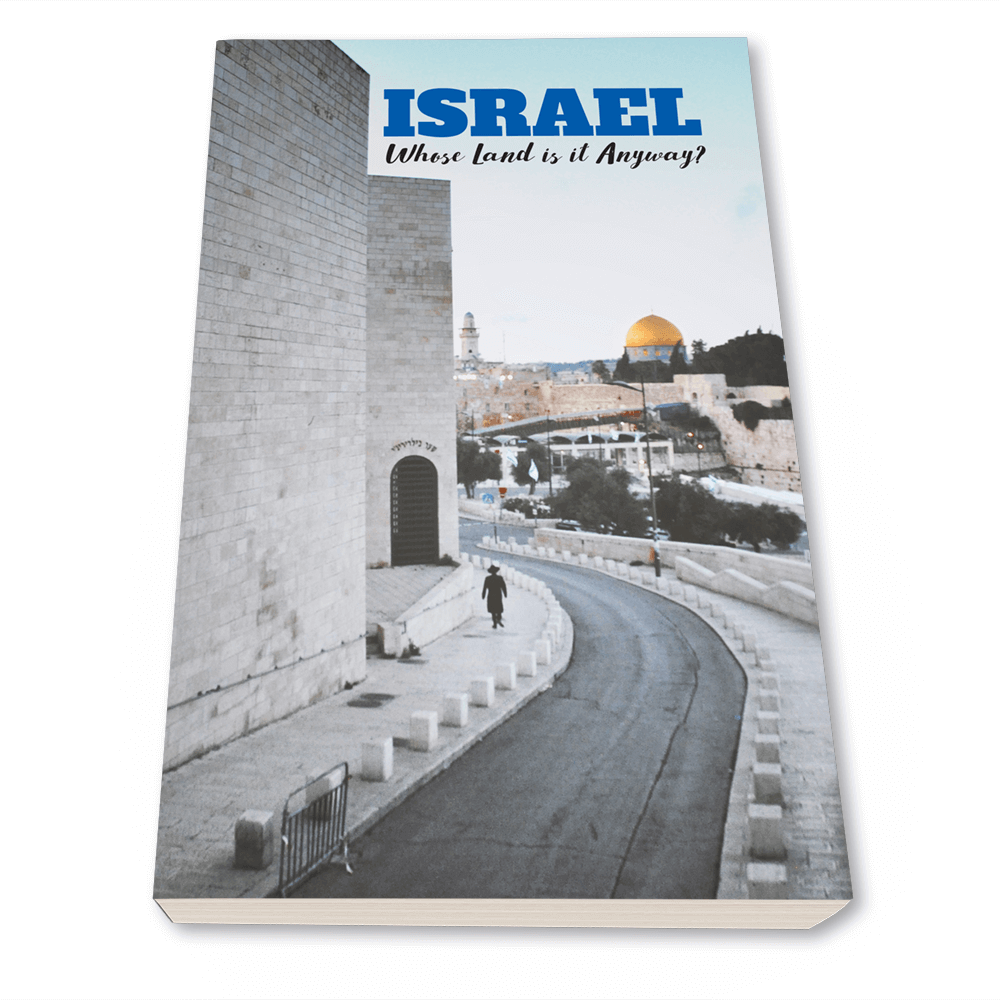
This booklet analyzes the Jewish and Arab claims to the land and makes sense of all the arguments surrounding the struggle. With historic, legal, and most importantly, biblical details about the land dispute, Israel: Whose Land Is It Anyway? will leave you with a clear, concise answer to how one should think about the land of Israel.
Apples of Gold: Food for Thought
While working near the Hebrew University in Jerusalem, Zvi came into contact with several students. The students, due to their studies at such a fine school, often tried to sound intelligent and boast about the great and famous names that they knew of. However, Zvi explained that men such as Shakespeare, Tolstoi, and Einstein were simply gifted but not great. In all circumstances, Zvi told the students to call on God, the only One who could give them everything they needed in life and the only One who could save their eternal souls.
Music
The Friends of Israel Today and Apples of Gold theme music was composed and performed by Jeremy Strong.
We need your help!
Would you please consider making a donation to help us continue this vital work and to reach more lives with the biblical message of God's heart for Israel and the Jewish people?


Comments 1
I listened to all 3 episodes. I didn’t hear anywhere the teacher, Chris Katulka, make the distinction between the new covenant of Jeremiah 31:31-34 and the new covenant given to the church. I’m curious as to whether he knows they’re not the same covenant. The new covenant as promised to Israel contains both physical and spiritual connotations, whereas the new covenant given to the church is denoted as only spiritual.