

The History and Heart of the Tabernacle, Part 1:
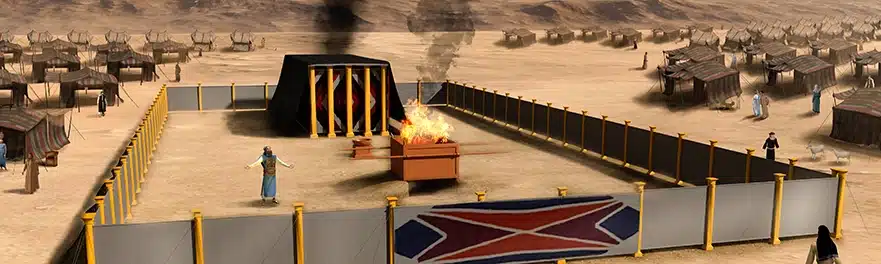
What was the purpose of Israel’s ancient Tabernacle? Exodus 25:8 explains it well: “Let them make Me a sanctuary, that I may dwell in their midst.” God wants to dwell with His people! We begin a series on the heart of the Tabernacle this week. Though God needed to maintain distance from a sinful Israel to remain holy and distinct, He always sought to redeem and draw near to them. The Tabernacle wonderfully made this possible.
Later, King Solomon built the Temple to continue and expand the Tabernacle’s purpose, being a fixed sign of God’s eternal covenant with Israel. But God did not seek to exclude Gentiles. His dwelling in the midst of Israel was meant to invite all nations to know Him through the witness of the Jewish people. Understand how God’s desire to dwell among His people is threaded throughout Scripture and underpins the great hope believers have in Him today!
Chris Katulka: Thanks for joining us for The Friends of Israel Today. I'm Chris Katulka, your host and teacher. Now listen, I need you to get to our website, foiradio.org, because that's where you can connect with us here at The Friends of Israel. We have over a decade of content on the site that features great biblical teaching, and amazing interview guests when it comes to understanding the importance of Israel and the Jewish people. Again, that's foiradio.org. Now today, we're actually going to start a truly unique study on the tabernacle. For the next couple of weeks, we're going to be looking at not only the different elements of the tabernacle and temple, but also the meaning behind all of the furnishings, all of the worship of the tabernacle and temple. Today, we're going to study the meaning. Why did God even establish a tabernacle? Why did God need a temple in Jerusalem?
So today we're going to look at that, specifically from Exodus 25:8. But before we get to that, let's see what's happening in the news. For the first time since 1968, the Great Isaiah scroll from the Dead Sea scrolls is being displayed in its full length at the Israel Museum in Jerusalem. The scroll is the oldest nearly complete book of the Hebrew Bible ever discovered, stretching over seven meters. It's 23 feet. This remarkable scroll contains the entire book of Isaiah preserved for more than 2,000 years in the dry caves near Qumran. Well, here's my take. The Dead Sea scrolls are more than just ancient Hebrew manuscripts. They're a bridge from God's promises in the past to his faithfulness toward his people, the Jewish people today. Discovered in 1947, just one year before the establishment of the state of Israel, and at a moment when the world questioned Israel's right to exist as a modern nation, the scrolls stood as Israel's ancient deed to the land. These 2,000 year old biblical texts declare that this land was given to the descendants of Abraham, Isaac, and Jacob—that's the Jewish people.
Over the next few weeks, we're going to look at the meaning and structure of the tabernacle and temple. But beyond the architectural design and elements of the tabernacle and temple, we're going to get to the meaning of each of these things. Why they matter? What was God communicating through these unique furnishings and the design of his sanctuary? We're going to begin our series on the heart of the tabernacle. Few verses reveal the heart of God as clearly and directly as Exodus 25:8. Let me read that for you. It says, "Let them build me a sanctuary that I may dwell in their midst." I'm going to read it again. "Let them make me a sanctuary that I may dwell in their midst." These simple words lie at the center of Israel's story. They explain the tabernacle. They explain the temple. They explain the priesthood, the sacrifices, the festivals, and the entire structure of Israel's worship.
They explain why the God of Abraham, Isaac, and Jacob revealed himself to his people uniquely and why the scriptures keep circling back to the same theme of God's presence. The story of the tabernacle and later the temple is not the story of ancient religious architecture. It's the story of divine nearness. It's the story of the God of Israel stepping toward his people, coming down to dwell with them, guiding them, meeting with them, blessing them, confronting them, restoring them, and shaping them into a people defined by his presence. Exodus chapter 25, verse eight captures the intention behind the entire biblical narrative. God desires to dwell with his people. This desire begins really not even in the book of Exodus, but one book before in the book of Genesis. In fact, it's in the Garden of Eden where God walked with humanity, Adam and Eve in unhindered fellowship.
His presence was life. It was beauty. It was blessing. When sin entered the world, that connection between God's creation and himself was lost. Humanity was exiled from Eden. The place where heaven and earth overlapped. That's important to understand that Eden was the place where heaven and earth overlapped with one another. The rest of scripture is the story of God restoring what was lost in Eden and step by step through covenants and promises and ultimately through the Messiah Jesus. The tabernacle is the first great movement toward restoring Eden's nearness. When God redeemed Israel from Egypt, he was not merely rescuing a group of slaves. He was forming a people who would be his treasured possession among the nations. He redeemed them by blood, led them through the sea, brought them to Sinai and entered into a covenant with them. The entire purpose of this covenant relationship comes into focus with Exodus 25:8.
He rescued them in order to dwell among them. Redemption was always leading to relationship. Freedom from Egypt was always meant to lead to fellowship with God. And this is why the tabernacle follows the covenant at Sinai. Redemption comes first, covenant comes next, and presence comes as the culmination. God doesn't ask sinful people to construct a sanctuary so they can earn his nearness. He redeems them first, then chooses to dwell among them as an act of his grace. The tabernacle is a gift of a God who desires to be close to his people and who provides the means by which such closeness is even possible. See, the tabernacle, I see it like this. It served as a portable Eden. Its structure, its symbolism, and furnishings intentionally reveal the creation account. Just think about it. The entrance faced east, just like the entrance to Eden after Adam and Eve were exiled from the Garden of Eden.
The gold, precious stones, and ornamental designs reflect the beauty of the garden. The menorah with his branches and buds and blossoms resembled the tree of life. The Cherubim woven into the curtains and overshadowing the ark remind Israel of the Cherubim who guarded Eden after humanity's exile. See, the message is unmistakable. God is restoring in part what was lost in Genesis 3, a little piece of it there. Through the tabernacle, he is creating a sacred space where heaven and earth intersect, where God and humanity meet again through sacrifice, priesthood, and holiness. But the tabernacle is not an exact restoration of Eden. It's a guarded nearness. A mediated presence of God. In Eden, there was no veil that separated God and Adam and Eve. But in Exodus, God is drawing near to a redeemed yet sinful people. His holiness is life giving, but also dangerous to those who approach him on their own terms.
And this is why the tabernacle contains these layers of holiness like the outer court, the holy place, and ultimately the centerpiece of holiness, which is the holy of holies. Each layer communicates that God is near, astonishingly near, but also holy, distinct, and unapproachable, except through the means that he provides. The tabernacle teaches Israel that the God who dwells among them is both gracious and holy. He desires relationship, but also instructs his people how to approach him safely and rightly. And this is where the entire structure of Leviticus, the book of Leviticus, fits in. The reason for the sacrificial system, the purity laws, the priestly regulations exist because of Exodus chapter 25:8. God is dwelling in their midst and his holiness requires that Israel distinguish between holy and common and between clean and unclean and between obedience and disobedience. The center of the book of Leviticus 10:10-11 summarizes the purpose of Israel's calling to learn to discern God's categories and to teach people how to draw near to the holiness of who he is properly.
See, God's presence in the camp means Israel must order its worship, its conduct, its communal life around the reality that the holy God, the creator of the universe lives among them. And this presence defines Israel's identity. While the surrounding nations worshiped silent idols rooted in specific territories, the God of Israel moved with his people. He was not bound to a mountain or a river or even a nation. He was the God of all creation, he says in Exodus chapter 19. He created all things. He owns all things. Yet he led Israel through the wilderness, guided them by a cloud and fire. When the cloud lifted, Israel moved. When the cloud rested, Israel camped. Their entire rhythm of life and travel and worship and community revolved around God's physical presence in their midst. See, Israel was not just a people with a religion. They were a people structured around the dwelling presence of the most high and living God.
The tabernacle also served as the tent of meeting, the place where Moses encountered God personally. The scriptures described these encounters as almost face-to-face, emphasizing the relational dimension of God's dwelling. See, the tabernacle was the meeting place between heaven and earth, between a God who redeemed Israel and the people he called to himself. Every sacrifice offered, every prayer spoken, and every festival of Israel celebrated pointed back to this truth. God had drawn near and his people were invited to draw near and return. And when we come back, we're going to see how this Exodus passage, Exodus chapter 25, verse eight, "Let them make me a sanctuary that I may dwell in their midst applies not just to the tabernacle, but as it gets grounded and rooted in Zion, in Jerusalem, in the temple. Stick around.
Steve Conover: Chris, I'm really looking forward to this year's Friends of Israel Look Up Conference coming up on March 5th and 6th online.
Chris Katulka: Same here, Steve. And I'm especially excited about this year's theme, Dispensationalism: Myths, Truths, and Why It Matters. It's such an important topic for understanding the Bible clearly.
Steve Conover: It's so important, Chris. And this year all four sessions will be taught by Dr. Mike Stallard. He's our Vice President of International Ministries. Mike is one of the clearest and most respected voices teaching on dispensational theology today.
Chris Katulka: Now across the four sessions, Dr. Stallard explains what Dispensationalism actually teaches, why we should interpret the Bible consistently, it's so important, and how it shapes our understanding of prophecy, Israel, and God's plan of redemption.
Steve Conover: We've designed this conference to equip everyday believers with discernment.
Chris Katulka: So here's what I want you to do. Join us for the Look Up Conference this March 5th and 6th at 7:00 PM online as we explore Dispensationalism: Myths, Truths, and Why It Matters.
Steve Conover: You can get all the details on how to register at foiradio.org. Again, visit us at foiradio.org.
Chris Katulka: Welcome back, everyone. We're in the beginning of our series on the meaning and the symbolism of the tabernacle and temple, and really the meaning behind all of these important elements that God purposefully placed in his holy place, his sanctuary. I want to move now from the tabernacle, which we talked about in our previous segment, to the temple. See, when God entered the promised land, the dwelling presence of God eventually would find a permanent home in Jerusalem through the construction of the temple. The temple was really not an idea, but the continuation and expansion of the tabernacle's purpose. It was the fixed sign of God's covenant with Israel. The visible reminder that God had placed his name in Zion. Solomon understood the magnitude of what was happening. During the temple's dedication, he marveled that the infinite God of heaven would dwell on earth, and yet the glory of God filled the temple just as it filled the tabernacle in Exodus chapter 40.
The temple became the spiritual heart of Israel's national life, the center of worship, sacrifice, prayer, and once again, the most important, God's divine presence dwelling with his people. The temple also emphasized Israel's calling to be a light to the nations. Solomon prayed that foreigners would come to the temple, “behold the glory of the God of Israel and worship him.” The prophets looked forward to a day when the nations would stream to Jerusalem to learn God's ways. Isaiah even described the temple as a “house of prayer for all nations”, capturing God's longstanding purpose that Israel would be the instrument of his revelation to the world. God's dwelling in the midst of Israel was never meant to be an exclusive privilege. It was intended to be a global invitation, God revealing himself to the nations through his chosen people. The destruction of the first temple, the one that Solomon built in 586 BC was more than just a historical catastrophe.
It symbolized the loss of everything Exodus 25:8 promised: the dwelling presence of God in the midst of Israel. And Ezekiel even describes this tragic departure of God's presence from the temple, a reversal of the movement that had defined Israel's story from Exodus onward. And yet even in judgment, God promised.. what? He promised restoration. Ezekiel saw visions of a future temple filled with God's glory, and the name of his restored city would be “the Lord is there.” Again, Exodus 25:8. The longing for God's presence remains central to Israel's hope. And see, this longing, it reaches its unexpected and profound fulfillment in the New Testament. When John writes that “the word became flesh and dwelt among us”, he's using the Greek word that literally means to be tabernacled among us. John is intentionally connecting Jesus to Exodus chapter 25:8. In the incarnation, God once again dwells in the midst of his people, but now in the person of Jesus, the Jewish Messiah.
And all the tabernacle and temple symbolized is embodied in Him. He is the meeting place between God and man. He is the holiness of God made visible. He is the presence of God walking among his people. He is the sacrifice. He is the priest. He is the altar. He is the sanctuary. The glory that once filled the tabernacle now dwells in him. And through him, God draws near, in a way, even more intimate than in the days of Moses or Solomon. After Jesus' ascension, the presence of God comes to dwell within believers through the Holy Spirit. And again, this is not the replacement of Israel's story by the extension of God's presence to all who belong to the Messiah. Paul's imagery of believers as God's temple is rooted in the tabernacle tradition. The same God who dwelled in a tent among the tribes of Israel now dwells in his people through the Spirit.
And this doesn't cancel God's ongoing plan for Israel or his promises regarding a future temple. The prophetic vision of a restored sanctuary in this Messianic kingdom that's coming remains part of Israel's hope and reflects God's continuing desire to dwell with his people in the land, the land of Israel that he gave them. See, the story that began in Exodus chapter 25:8 stretches forward into the final chapters of the Bible. Revelation speaks of a future when God once again will dwell with humanity in a world made new. The voice from the throne, it proclaims in Revelation chapter 21, "Behold, the dwelling place of God is with man and he will dwell with them." The end of the story is the fulfillment of the beginning. Eden restored, presence renewed, God forever with his people. See, Exodus 25:8, it's not ancient history, it's the theological backbone of the entire Bible. It explains why God created humanity, why he called Israel, why he sent the Messiah, why he poured out his Spirit and why he will renew creation in the future. See, it reveals that God will not be distant, but desires to be present. He desires to dwell among his people and everything he does from the wilderness tabernacle to the glory filled temple, from the incarnation to the new Jerusalem, declares that desire with unwavering clarity. “Let them make me a sanctuary that I may dwell in their midst.” These are the most reassuring words to a people lost in the wilderness.
Steve Conover: Israel on the verge of becoming a state, a teenaged Holocaust survivor arrives on her shores alone. His name is Zvi Kalisher. Little did he know his search for a new life in the Holy Land would lead him to the Messiah. Zvi, enthusiastic to share his faith, engaged others in spiritual conversations. Many of which can be found in our magazine, Israel My Glory. While Zvi is now in the presence of his Savior, his collective writings from well over 50 years of ministry continue to encourage believers worldwide. Now Apples of Gold, a dramatic reading from the life of Zvi.
Mike Kellogg: When I returned home from one of my frequent army tours of duty, I took my family for a walk through the district of Mea Shearim, inhabited by the most Orthodox Jews in Jerusalem.
Several children were dancing around a bonfire, singing, “We shall rebuild the Holy Temple.”
When I came close, I noticed New Testaments burning in the bonfire.
I asked the children, “Why do you burn these books?” Then I pulled out from the fire one New Testament.
I said, “Everything in this book is about the living God and the Messiah. It is a sin to burn His Word.”
They all shouted, “This is an Avodah Zarah [which means ‘an alien religion’]. We must destroy it. Burning these books is a mitzvah [which means ‘a good deed’].” Suddenly a bearded man came up and said, “Throw that book back into the fire.”
I replied, “I will not throw this holy book into the fire. I will show it to your rabbi and ask him if he permitted you to do this.” As soon as I said this, the rabbi came. I opened the New Testament and started reading from it at random. The page to which I opened was Hebrews 11. I read it aloud and all listened.
When I finished, the rabbi asked, “Did you study in the yeshiva?”
“No,” I said. “This book was my yeshiva.”
Then I opened to Matthew 5:43–44: “You have heard that it was said, ‘You shall love your neighbor and hate your enemy.’ But I say to you, love your enemies, bless those who curse you, do good to those who hate you, and pray for those who spitefully use you and persecute you.”
The rabbi looked at the New Testament and shouted, “He is a goy!” (Goy means “gentile.”)
I said, “I only tried to show you what this book is all about. Here, you may have it if you still want to burn it.”
He reached out to take the book, but suddenly his hand started shaking. I asked, “Why are you shaking? Perhaps the Spirit of God is speaking to you. Perhaps He wants to punish you for trying to burn His Word. If you burn this book, millions of other New Testaments will be printed by those who love God and His Word. However, one day you will stand before the throne of God for judgment.
“Suppose you saw the Tenach profaned and burned. You would fast and wear sackcloth. This New Testament is the same Holy Scripture. Of whom did Isaiah speak when he wrote, ‘Therefore the Lord Himself will give you a sign: Behold, the virgin shall conceive and bear a Son, and shall call His name Immanuel’ (Isa. 7:14)? Or this: ‘For unto us a Child is born, unto us
a Son is given; and the government will be upon His shoulder. And His name will be called Wonderful, Counselor, Mighty God, Everlasting Father, Prince of Peace’ (9:6)? You are burning the very faith you profess to believe.”
When the rabbi heard me speak to him in Yiddish, he and his little lambs were no longer afraid. The rabbi looked wistfully at the bonfire. I felt sorry for him because he looked so bad.
“I am also a Jew,” I said, “but I believe with all my heart in the Messiah, Yeshua Hamashiach. Through Him I receive forgiveness of sins and eternal life.”
His poor lambs started yelling, “Meshumed!” Meshumed means “apostate.” This time the rabbi silenced them and asked me, “Are you still angry at me?”
“No, I am not angry at you or at your foolish sheep. I just feel sorry.” I gave him the New Testament and asked him to read it. This time he did not cast it into the fire, but put it into his pocket. A good sign—the Lord can do the rest.
Chris Katulka: Thanks for joining us for today's episode of The Friends of Israel Today. Hey, listen, don't forget to register for our upcoming Look Up conference focusing on Dispensationalism: myths, truths, and why it matters. You can see that on March 5th and 6th, and you can find out more on our website, foiradio.org. Again, that's foiradio.org. Now, next week, we're going to continue our series through the parts of the tabernacle, and we talked about the big meaning of the tabernacle today, why God wanted a tabernacle built. Exodus 25:8. But now we're going to take another step into the tabernacle with our first interaction, and that's with the altar of the Lord. So join us next week as we study what was the altar in the tabernacle and temple. What did it mean to the Israelites and the worship that they would give to the Lord?
Our mailing address is FOI Radio PO Box 914, Bellmawr, New Jersey, 08099. Again, that's FOI Radio PO Box 914, Bellmawr, New Jersey, 08099. You can call our listener line. That's 888-343-6940. Again, that's 888-343-6940. Today's program was engineered by Bob Beebe. Edited by Jeremy Strong, who also composed and performs our theme music. Lisa Small is our executive producer. Sarah Fern is our associate producer. The late Mike Kellogg read Apples of Gold. Steve Conover is our executive director here at The Friends of Israel, and I'm Chris Katulka, your host and teacher. The Friends of Israel Today is a production of the Friends of Israel Gospel Ministry. Passion for God's Word. Compassion for God's Chosen People.

Apples of Gold: Unholy Fire
Upon returning from his army service, Zvi and his family visited a town where books were being burned. He saw New Testament Bibles in the flames. When he inquired why they were destroying the Holy Scriptures, he was told they were full of lies. Heartbroken, Zvi retrieved a Bible from the fire and began reading from Hebrews 11 and other passages. The crowd heard the truth of God’s Word, and through Zvi’s bold faith, a rabbi's heart was changed.
Music
The Friends of Israel Today theme music was composed and performed by Jeremy Strong.
Partner with us!
Your financial gift is essential—it ensures we stay on the air, teaching biblical truth about Israel and the Jewish people. If this program has ministered to you, please consider making a gift today.


