

The History and Heart of the Tabernacle, Part 3:
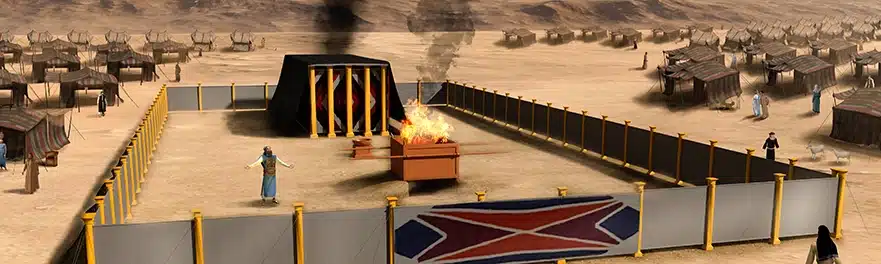
In Israel’s ancient Tabernacle, the Israelites immediately arrived at the altar, where they met the Lord through sacrifice. Just beyond the altar in the courtyard stood the laver, the bronze basin where the priest met God through cleansing. As the altar demonstrated God’s desire to forgive sinful man, the laver demonstrated His desire to purify His people. It was an essential provision from God to allow the priests to serve Him properly.
Part 3 of our series on the Tabernacle extracts the truly profound significance of the instrument God used to allow the priesthood to enter into His presence. In addition to its physical purification, the laver points to God’s new covenant in which He promised to cleanse His people’s hearts spiritually. We see through the laver that God not only desires to be near His children; He also seeks to make them ready to enter His presence—a stirring truth for us today!
If you missed an episode of this series, you can catch up in our Archives!
Chris Katulka: Hey, thank you so much for joining us for The Friends of Israel Today. I'm Chris Katulka, your host and teacher. Now listen, we're in the middle of our study on the Tabernacle and Temple, and if you missed the previous episodes of this series, listen, you can go to our website and you can listen to them. You just need to go to foiradio.org and there you can connect with The Friends of Israel Gospel Ministry. You can listen there anytime, but we also have decades of content on that website as well that features teaching for the last 10 years and also great interviews. Again, you can visit us at foiradio.org. Now, today we're going to continue our study on the tabernacle. We've been looking at the major theme of the tabernacle. Why did God want to build the tabernacle? And then we started our journey last week by walking into the eastern gate of the tabernacle and finding our first place of worship, which was the altar.
Well, this week, as you continue walking through the tabernacle or the temple, you're going to run into something even more important as well, which is the laver, the place of washing. And so today we're going to look at the laver where the priest would wash themselves in service to the Lord. But before we get to that, let's look at what's happening in the news. Exiled crown prince Reza Pahlavi is widely seen within the diaspora of Iranians as the most credible opposition figure to lead Iran should the Islamic Republic completely collapse, positioning himself as the voice for a democratic, secular transition after decades in exile. In a recent Washington Post article, he reaffirmed that he is prepared to guide a transitional government—emphasizing that he does not seek to restore absolute monarchy.
Well, here’s my take, I do believe this is a question on everyone’s mind. How will the Iranian people respond the day after the Islamic Republic falls? Pahlavi seems the likely candidate, but it’s up to the people. It’s important to remember that more than 80% of Iranians dislike the Islamic Republic, only 20% supported the Ayatollah. Maybe, the Iranian people are ready for freedom the way that we’ve always hoped for.
Chris Katulka: When God said in Exodus 25:8, "Let them make me a sanctuary that I might dwell among them," he was announcing his desire to live in the midst of his people in a relationship of holiness, intimacy, and ongoing encounter. And that verse set the entire agenda for the tabernacle structure and every item within it. Now, in the first episode of this series, we explored how God's dwelling place was his own initiative, a gracious act of divine nearness in which he came to camp with his people. In the second episode, we stepped through the eastern gate of the tabernacle and temple, and we arrived immediately at the altar, the first place where the Israelite met God in offering, dedication, fellowship, and even restoration. But now standing between the altar and the entrance to the tent itself, the sanctuary, we encounter the second major feature of the courtyard, the laver. The basin of bronze filled with water. The divinely appointed place of cleansing for the priesthood.
If the altar was the place where God, the priest, and the worshiper met through sacrifice, the laver was the place where the priest met God through cleansing. It was not for the common Israelite. It was exclusively for those who served inside the sanctuary, yet its function was essential not only for their service, but for Israel's entire relationship with God. Because see, without the laver, no priest could draw near. Without cleansing, no ministry could be performed. Without the washing God commanded, the dwelling place he established, it couldn't operate. And as we move into this third episode, we discover something, that the laver stands at the necessary transition point between sacrifice at the altar and service for the priest. God did not place it inside the tent and he didn't place it beside the altar. I believe he put it deliberately between the altar and the entrance to the holy place, ensuring that every priest, no matter his rank or duty, passed it before entering God's presence.
See, its placement tells a biblical story. Sacrifice opens the way, but cleansing prepares the worshiper to walk that way. To approach God requires atonement, but to serve God requires purity. The altar addresses the guilt of sin. The laver addresses the defilement that happens in life. God was not content to merely forgive his people. He intended to cleanse them so that those who minister before him could worship and serve him in his holy dwelling without fear. The laver becomes a powerful symbol of God's desire, not only to forgive, but to purify. The laver itself was unique among the tabernacle furnishings because it was constructed without prescribed measurements. See, the ark had precise numbers. The table of showbread had exact dimensions. The altar was measured down to its horns, but the laver was left undefined in its size. Scripture simply says it was to be a bronze basin with a stand. That's in Exodus 30:18.
This absence of measurement is not simply an oversight. It's biblical. The washing God provided for his priests was not limited, not quantified, not rationed. It's abundant. The laver was as large as generosity required. While the altar measured the cost of forgiveness in blood, the laver measured the abundance of cleansing in water. See, God did not specify its size because the need for cleansing would continue throughout the priesthood ministry, and the provision for that cleansing would never run dry. Even more striking is the material that was used for the laver. The bronze mirrors donated by the women who served at the entrance of the tabernacle, Exodus 38:8. See, mirrors in the ancient world were not glass, but highly polished bronze. Precious objects that carried with it, pride. For the women of Israel to surrender their mirrors, the tools of self-reflection and adornment was an act of profound devotion to the Lord.
They gave up the very instruments that symbolized self-focus and identity in order to create the vessel that would cleanse the priests who ministered before God. And in this way, the laver was literally made from reflections, but used to remove anything that hindered true worship. The priest washed in the basin shaped from the surrendered mirrors of Israelites’ faithful women, a powerful statement that approaching God requires turning from self and turning toward holiness. See, the laver was not simply a functional sink. It was a symbol of transformation, a testimony that God cleanses his servants through the humility and devotion of his people. The daily ritual of washing at the laver was non-negotiable. God commanded Aaron and his sons to wash their hands and feet every time they approached the altar to serve or enter the holy place. Exodus chapter 30:19-21. And the text is emphatic.
It says, "They shall wash with water so that they will not die." See, this was not a ceremonial preference. It was a matter of life and death for the priests. The stakes were high because the holiness of God is real. The laver was God's gracious provision that allowed his priests to serve in his presence without being consumed by their own impurity. Their washing was not about physical dirt per se, but about symbolic cleansing and an outward act demonstrating an inward need for purity. The priest ministered in a world that was filled with death, blood, sweat, human weakness. Without constant cleansing, they could never stand before the holy one of Israel. God was teaching them and through them, the entire nation, that holiness is not static. It must be continually pursued, continually refreshed, continually renewed. The imagery of hands and feet is also deeply symbolic. Hands represent action, what the priest does.
Feet represent direction where the priest walks. By washing both, the priest enacted a confession. ‘Lord, cleanse what I do and where I go.’ And every time water touched their skin, they were reminded that their service was not about personal ability, heritage, or status, but about God's gracious cleansing. Their ministry flowed from holiness, not from human skill. And the laver was the perpetual reminder that ministry must always be marked by purity. No matter how many sacrifices could be offered at the altar, the priest could not bypass the laver. Forgiveness does not eliminate the need for holiness. It empowers it. The laver also served as a theological biblical bridge between the altar and the holy place. See, at the altar, the priest dealt with the sin of the worshiper through sacrifice. At the laver, he dealt with his own need for cleansing. Only after washing could he enter the tent to attend the lampstand, the table of showbread, the altar of incense.
See, this order teaches us something profound about the nature of worship. Before we bring light, bread, or incense into the presence of God, before we serve, feed, or pray, we must first be cleansed. And the priest could not bring the prayers of Israel before God without washing. He could not tend to the light that symbolizes God's presence at the menorah without washing. He could not lay out the bread of fellowship without washing. Every act of ministry flowed from cleansing. The laver was the place where the priest acknowledged day after day that service without holiness is absolutely impossible, especially in the tabernacle. And as we're going to see when we come back, I want you to stick around—the same applies for the temple as well. We'll see you soon.
Chris Katulka: I wanted to take a break and share something I really think that you're going to enjoy as we enter this Easter and Passover season. We're excited to share with you a unique devotional looking deeper into the significance of Passover and Easter called Finding Messiah in Passover. Using the traditional Jewish Passover guide, which is called the Haggadah, you'll walk a 32-day journey through the redemptive story of Jesus, the Messiah. People, just remember, Jesus celebrated Passover every year of his life. So I want you to discover how the Passover traditions foreshadow His sacrifice and experience a renewed understanding of His love and grace. This booklet and devotional is affordable and a great way to do worship individually or with your family or with your Bible study group. You can find out more or order your copy of Messiah in Passover, a 32-day devotional, today at foiradio.org. Again, that's foiradio.org.
Chris Katulka: Welcome back, everybody. As we walk through the tabernacle and temple, we've seen the altar and now we're at the laver, the place where the priest would wash for service to a Holy God. And we've been seeing that in the tabernacle and now we're about to transition to the temple. The significance of the laver actually grew even larger. Remember, there were no sizes that were put in place in Exodus, and literally it grew larger. Solomon created a massive 10 cubit wide basin called the “Sea of Bronze” when he built the temple, and it rested on 12 bronze oxen. You could read about that in I Kings 7:23- 26. It was so large, it held thousands of gallons of water. Surrounding it were 10 smaller lavers for washing the sacrificial materials. The expansion of the laver in the temple era demonstrated the same truth as the unmeasured basin in the tabernacle.
God's supply of cleansing is abundant and sufficient for the expanding ministry, for the expanding life of his chosen people. So as Israel grew, as worship increased, as sacrifices multiplied, the cleansing God provided scaled with their need. The sea of bronze towered in the courtyard as a visual declaration that holiness was not a narrow requirement reserved for the few, but a broad invitation sustained by divine provision. And throughout Israel's history, the laver and its symbolism became a reference point for the prophets and the wisdom writers as they called the nation to purity and repentance. Isaiah cried out, "Wash yourselves, make yourselves clean. Remove the evil of your deeds." That's Isaiah 1:16. Ezekiel promised that God would sprinkle clean water upon his people to cleanse them from all of their impurities. Ezekiel 36:25. The psalmist cried out, “Wash me thoroughly from my iniquity.” Psalm 51:2. These are laver prayers.
Echoes of the reality Israel witnessed every day in the courtyard. The laver taught them visually what the prophets taught verbally. Holiness is God's desire for his people and cleansing is God's gracious provision. And in this sense, the laver also shaped Israel's imagination for the hope of their future restoration. See, when God promised the new covenant, he described it in terms of cleansing water and renewed hearts. The ritual washing of the priest foreshadowed the spiritual cleansing God promised to extend to the whole nation. Even the prophet Zechariah foretold a day when a fountain will be opened for sin and impurity. That's Zechariah 13:1. The laver was not merely an artifact of Israel's worship, but a signpost pointing forward to a greater cleansing that would come. And yet, even without jumping ahead into the New Testament implications, the laver plays a crucial and beautiful role in understanding of the sanctuary itself.
See, if the altar revealed God's provision for atonement, the laver revealed God's desire for holiness in the ongoing life of those who serve him. The altar addressed the barrier. The laver addressed the journey. At the altar, sin was forgiven. At the laver, life was prepared. One could stand forgiven at the altar, yet still be unfit to enter the presence of God without washing. And this isn't because forgiveness is insufficient. It's because a relationship with a holy God is not merely transactional, it's supposed to be transformational. That's why we call it sanctification. God didn't desire a forgiven people who remain unchanged. He desired all holy people who reflected his character. And the laver is the embodiment of that desire. Standing between the altar and the entrance of the holy place, the laver made a biblical statement that frames the rest of the sanctuary. God's presence is both accessible and awe-inspiring.
He welcomes his people through sacrifice and he invites his ministers to embody holiness as they serve him. “Be holy as I am holy,” God says. The laver reminds us that God is not only a forgiving God, but a purifying God. He doesn't merely accept our sacrifices. He shapes our life. He doesn't merely dwell among his people. He sanctifies them for his service. The existence of the laver and the ritual surrounding it teaches that holiness is not a static condition once again, but an ongoing commitment. It's not achieved just once. We are justified and made holy in God's sight, but as we walk with God today, it's something that we pursue continually. And so as we arrive at this third episode in our journey through the sanctuary, the laver invites us to consider what it means to serve God who dwells among his people. It teaches us that cleansing is not optional.
That purity is not peripheral. That approaching God requires preparation. It shows us that worship flows from holiness and that holiness flows from God's own provision. It testifies that God who dwells with us also works within us. Just as the priest could not bypass the laver, so Israel could not bypass the call to holiness. The dwelling place of God was a holy place, and those who served in it were required to be holy as well. So standing before the laver, the priest saw his reflection in the water, an echo of the mirrors from which it was made, and was reminded that his identity when he would see himself was shaped not by his office, but by God's cleansing. And each time his hand touched the water, he felt the grace of a God who prepared him for service. And each time he washed his feet, he stepped into his duties aware that he walked on holy ground.
The laver was the silent yet constant witness of God's transforming work in his servants. And so in this way, the laver becomes an essential companion to the altar in understanding the sanctuary as a whole. The altar invited Israel to draw near through sacrifice. The laver ensured the priest could draw near through cleansing. And together they framed a journey into God's presence. Atonement, then purification. Forgiveness, then transformation. Approach, then intimacy. The God who said, “Let them make me a sanctuary that I may dwell among them,” Exodus 25:8, also provided a laver so that his ministers could dwell with him in holiness. The laver stands as a testament that God not only desires to be near his people, but desires to make them ready for his nearness.
Steve Conover: Now, Apples of Gold, a dramatic reading from the life and ministry of Holocaust survivor, Zvi Kalisher.
Mike Kellogg: Over the years, the Lord has taught my wife and me to have an open-door policy in our home. People are always coming and going, and some even sleep here. Once each year an elderly Christian gentleman from Germany visits Israel and usually sleeps at our home.
When he visited this year, he said, “Zvi, I am 80 years old now. Before I die, I want you and your wife to visit me in Germany. I want to repay some of the kindness you have shown me over the years.” And so, off we went to Germany.
When we arrived, he surprised me with an invitation to speak at an assembly of 400 people, filled with mostly Russian immigrants. Because I can speak both German and Russian, it was a wonderful opportunity to speak about Christ.
While many of those present were believers, there were some unbelieving Jews in the crowd. I was reminded of King Solomon’s words, “There is nothing new under the sun” (Eccl. 1:9). They were just like their brethren in Israel. I knew exactly what they were going to ask.
“Did you come here to make us Christians?” one asked.
I replied, “I have come here to make you good Jews. I want you to turn back to the Bible, and then you will know what He expects of us. He wants us to tell of His salvation to the ends of the earth. Because you do not know what the Bible says and do not believe in the Lord Jesus Christ, I am not surprised you asked such questions. But now that you have heard the truth, you are responsible before God.”
This was the first time someone from Israel had spoken to them about Christ.
My host had another surprise for me during our visit. One day, two of the leaders from the assembly where I preached visited us, and I recognized them immediately. They had stayed in our home a few years ago, but they never mentioned they were leaders in an assembly with more than 400 members.
It was a great blessing for me, a Jew from Israel, to preach about our Savior Jesus Christ to so many people and to meet two of the leaders of this wonderful assembly. I encouraged them to continue reading the Bible and trusting in the Lord.
I told them, “You would be surprised how many believe in Him as their Savior among our own people, the Jews. The apostles and the first believers were all Jews, and they believed what is written in Deuteronomy 18:15: ‘The LORD your God will raise up for you a Prophet like me from your midst, from your brethren. Him you shall hear.’ When we trust in the Lord and His Word, we always move ahead spiritually, never backward.”
Just as Jews in Jerusalem always want to see for themselves what I am reading from the Bible, so the Jews in Germany wanted to see my Hebrew Bible. When German believers spoke with them about Christ, they did not believe them because they were Gentiles and were using what Jewish people call the “Gentile Bible.” I was glad to show them my Bible so they could see for themselves I was speaking from the Word of God. There is a Yiddish saying, “How can a cat cross the sea?” Likewise, how can a Jew from Jerusalem go to another country and preach the gospel of Christ? It seems impossible, but it happened. I was thrilled the Lord gave me the special privilege of preaching to so many people, many of whom had never heard the gospel.
Truly, as it is written in Isaiah 2:3, “Out of Zion shall go forth the law, and the word of the LORD from Jerusalem.” The Lord brought forth much fruit, for which we sincerely thank Him.
Chris Katulka: Hey, thanks so much for joining us for today's episode of The Friends of Israel Today. Hey, don't forget to go and order your copy of Messiah in Passover, a 32-day devotional today. You can do that by going to foiradio.org. Again, that's foiradio.org. Join us next week as we continue our series as we walk through the tabernacle and the temple. Our mailing address is FOI Radio, PO Box 914, Bellmawr, New Jersey, 08099. Again, that's FOI Radio, PO Box 914, Bellmawr, New Jersey, 08099. You can call our listener line. That's 888-343-6940. Again, that's 888-343-6940. Now, today's program was engineered by Bob Beebe. Edited by Jeremy Strong, who also composed and performs our theme music. Lisa Small is our executive producer. Sarah Fern is our associate producer. The late Mike Kellogg read Apples of Gold. Steve Conover is our executive director here at The Friends of Israel, and I'm Chris Katulka, your host and teacher.
Thanks so much for being with us today. The Friends of Israel Today is a production of the Friends of Israel Gospel Ministry. Passion for God's Word. Compassion for God's Chosen People.
Finding Messiah in Passover
Finding Messiah in Passover
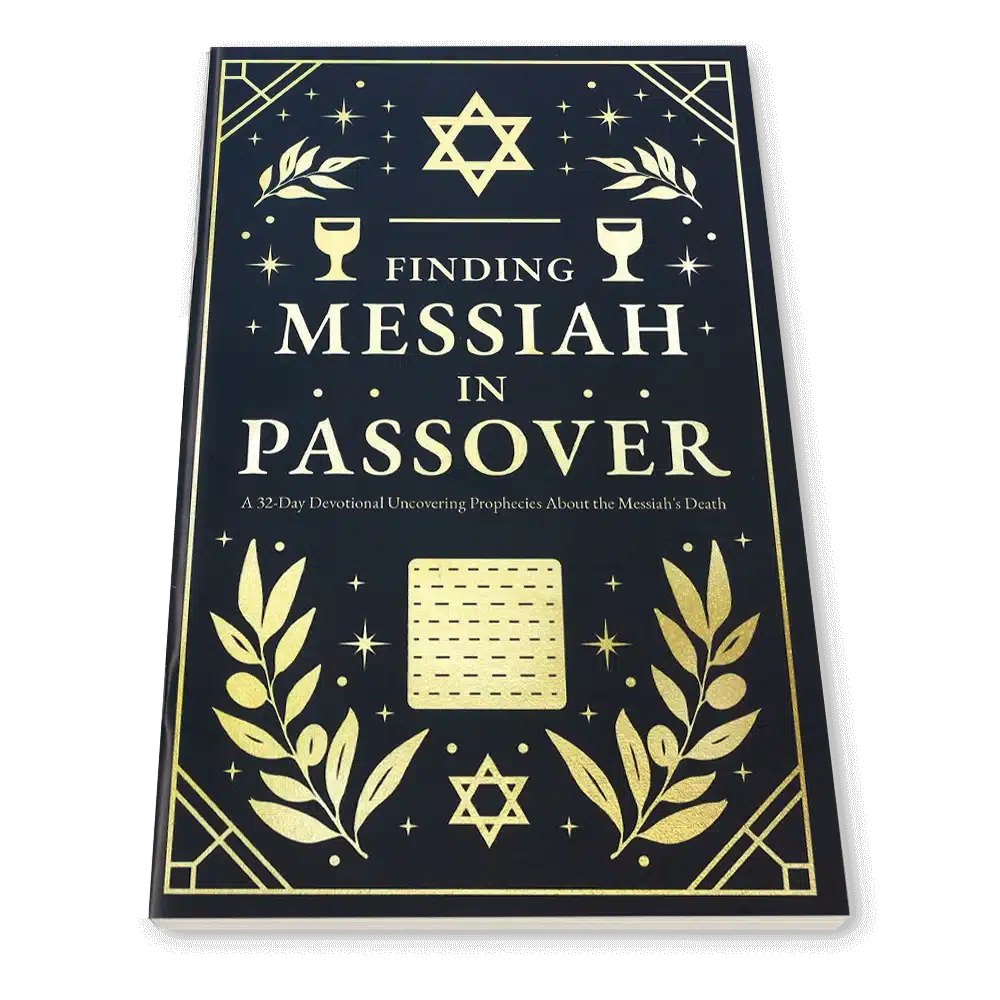
Look deeper into the significance of Passover and Easter with this insightful devotional. Using the Jewish Haggadah as a guide, this 32-day journey explores the redemptive story of Jesus the Messiah.
Jesus celebrated Passover every year of His life! Discover how the Passover traditions foreshadow His sacrifice, and experience a renewed understanding of His love and grace.
Apples of Gold: How Can a Cat Cross the Sea?
While visiting an elderly Christian friend in Germany, Zvi was surprised with an invitation to speak at an assembly of 400 people, filled with mostly Russian immigrants. Thanks to his ability to speak both German and Russian, it was a wonderful opportunity for Zvi to speak about Christ. He found his unbelieving Jewish listeners in Germany to be much like the unbelieving Jewish people in Israel: closed off to the name of Jesus. Listen to find out how Zvi used his unique platform as a Jewish believer to share the Word of God.
Music
The Friends of Israel Today theme music was composed and performed by Jeremy Strong.
Partner with us!
Your financial gift is essential—it ensures we stay on the air, teaching biblical truth about Israel and the Jewish people. If this program has ministered to you, please consider making a gift today.


