

The History and Heart of the Tabernacle, Part 4:
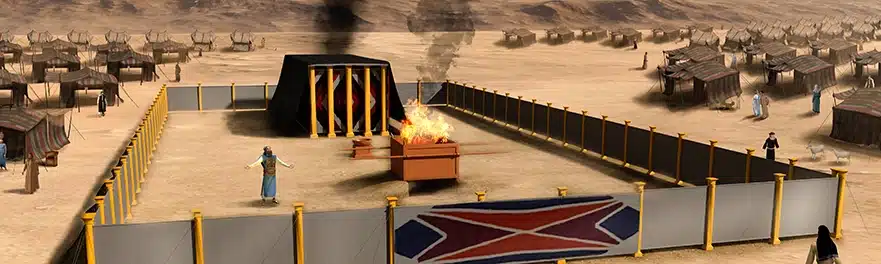
After studying the altar and the laver within ancient Israel’s Tabernacle in recent weeks, we now continue into the sanctuary, the holy place, to find the table of showbread. Here 12 loaves of bread remained arranged before the Lord. The symbolism and practicality in this image is profound: God was hosting His people in His house. After cleansing them outside the sanctuary, He invited the priests inside to fellowship with Him and eat bread on behalf of all the people.
The bread demonstrates our God’s desire to dwell with His people and His covenantal faithfulness, and we can be sure He will remain true to His promises to Israel. Likewise, believers in Jesus assuredly have peace with God. He invites us to enter into His presence in fellowship through His Holy Spirit, just as He invited the priests to join Him at the table of showbread. The Lord desires that we join Him and enjoy His provision today, for our Savior is the Bread of Life!
If you missed an episode of this series, you can catch up in our Archives!
Steve Conover: Thank you for joining us for The Friends of Israel Today. I'm Steve Conover, executive director of The Friends of Israel Gospel Ministry. With me is our host and teacher, Chris Katulka. foiradio.org is where you can connect with us. We have over a decade of content on the site featuring Chris Katulka's insightful teaching and various interview guests. Again, that's foiradio.org.
Chris Katulka: Steve, we're in the middle of an awesome series right now where we're actually walking through the tabernacle. We talked about the meaning of the tabernacle, and then we started our journey walking east into the actual sanctuary where we saw the altar in one episode, and the laver in another episode. Well, now we're actually entering into the sanctuary itself, the tent, where we're going to turn right and see the table of showbread. And we're going to see all about this picture of God's presence with his people, Israel, and what it means for us as followers of the Lord Jesus. So I'm looking forward to talking about the table of showbread.
Steve Conover: But first in the news, Iran’s new supreme leader, Mojtaba Khamenei, takes power at a moment of intense external pressure and rising internal unrest. He has far less backing from the hardline loyalists who once firmly supported his father's rule. Though state media showed public celebrations after his selection, interviews and reporting suggest the Islamic Republic now rests on a much slimmer base of support than it once did.
Chris Katulka: Well, Steve, here's my take.This should be no surprise as 80% of Iranians disagree with the theocracy and rule of the Islamic Republic. Mojtaba is a hard line ruler with the desire to pick up the pieces after operation epic fury and to return to their former government. Well, I don't think Trump, Netanyahu, or the Iranian people will let that happen.
Chris Katulka: Well, as we continue our journey into the sacred world of the temple, we're moving another step deeper into the place where heaven and earth meet, where the God of Israel chose to dwell among his people. Now, having passed the altar and the laver in our first few episodes of the series, we now step into the sanctuary itself, the holy place, and our attention is drawn to one of its sacred furnishings, the table of showbread. Here within the tent of meeting, we begin to see even more clearly that the tabernacle was not only about sacrifice and cleansing, but also about communion, provision, order, and fellowship in the presence of God.
The table of showbread stood on the north side of the holy place, which means actually when you walk in, it was on the right-hand side of the tabernacle, which is opposite of the lampstand, as described in Exodus 26:35. It was not a big structure by human standards. According to Exodus 25:23-30, it was made of acacia wood. It was overlaid with pure gold. It measured about three feet long, a foot and a half wide, and two feet high. It had a gold molding around it, rings on its corners and poles for carrying it just like the other sacred items in the tabernacle. See, every detail mattered. The table was beautiful, holy, and portable, reminding Israel that the God who provided for them was present with them throughout their journey. The table was not merely furniture. It was a sacred sign.
Upon it were placed the 12 loaves of bread arranged before the Lord continually. This bread is often called showbread, but the Hebrew expression is even deeper. It's even richer. It can be understood as the bread of presence or in actual Hebrew, the bread of the face, because it stood continually before the face of God. See, this bread was displayed in God's presence. Bread that symbolized something far greater than physical nourishment. It was a testimony that the 12 tribes of Israel were set before the Lord continually remembered, represented and sustained in his sight. And that image is profound because see, the bread wasn't there because God needed food. Oftentimes, that's what it was like with pagan deities. But see, the God of Israel is not like the pagan deities of the nations that surrounded Israel who were thought to depend on human offerings for survival or strength.
In Psalm chapter 50, it actually makes it abundantly clear when the Lord says this, "If I were hungry, would I not tell you? " See, God doesn't need to eat bread as men do. Instead, the table of showbread was not about feeding God. It was about displaying his covenant relationship with his people, Israel. 12 loaves stood for the 12 tribes of Israel. All of Israel was represented there, not just Levi, not just the priests, not just the strong or the elite, but the whole covenant nation. Before God's presence, Israel was symbolically placed on the table continually before him. He saw them, he knew them. He remembered his covenant with them. The bread testified that Israel lived before the face of God and by the provision of God. Leviticus 24:5-9 gives us even further detail. The priests were to take fine flour and bake twelve cakes, each made with two-tenths of an ephah.
Their loaves were arranged in two rows, six in a row, on the pure gold table before the Lord. Pure frankincense was placed with each row as a memorial portion, which was an offering by fire to the Lord. And every Sabbath, the bread was to be set in order before the Lord regularly from the children of Israel as an everlasting covenant. See, it's then that Aaron and his sons were to eat it in a holy place because it was most holy to him from the Lord's offerings. That means the bread functioned in multiple ways at once. It symbolized Israel before God. It testified to God's ongoing provision and it was arranged in sacred order before him, and then it was eaten by the priest in a holy meal. And in this way, the table of showbread was not just a sign of representation, but even more important, fellowship.
See, think of it like this. God was, in a sense, hosting his people in his home. And even though only the priests physically ate the bread, the bread came from the children of Israel and therefore represented the nation in covenant communion with the Lord. And this is one of the most beautiful themes in all of the tabernacle. The God of Israel did not merely rescue his people from Egypt so that they could survive. He redeemed them so that he could dwell with them. The goal of redemption was communion. The table inside the sanctuary reminds us that life with God is not bare survival. It's fellowship. It's nearness. It is ordered life in his presence. See, after sacrifice at the altar and cleansing at the laver, there is bread in the holy place. There is provision in God's house. There's a place set before him. And the materials of the table also preach.
So I'm going to tell you, like other furnishings, it was made of Acacia wood overlaid with gold. And Acacia wood was durable. It's suited for the wilderness while gold reflects holiness and glory and kingly splendor. The combination of wood and gold remind us that what was ordinary in itself was sanctified and glorified for divine service. Look, even the utensils associated with the table, the plates, the dishes, the pitchers, the bowls were all made of pure gold. Nothing about this table though was common, yet the item placed upon it was bread. The most basic staple of daily life. There is something deeply moving about this contrast, gold and bread, glory and daily provision. The holiness of heaven and the ordinary needs of earth come together on this table. And God takes what is basic to human existence and places it in his presence. He is the God not only of all creation, glory and honor, but of the daily bread that we need.
The table of showbread declares that the ordinary sustenance of Israel is not disconnected from the presence of a holy God. Every loaf, every meal, every provision ultimately comes from his hand. That truth would have resonated deeply with Israel, especially in light of their wilderness experience. God had already fed them with manna from heaven. And day after day, morning by morning, he provided bread in the wilderness. And Israel knew by experience that man doesn't live by bread alone, but by every word that proceeds from the mouth of the Lord. The table of showbread inside the sanctuary takes that wilderness lesson and gives it real meaning. God is their provider. Their life depends upon him. Their tribes stand before him because he upholds them. And every Sabbath, the bread was renewed. As if to say once more, the covenant endures. The Lord's provision continues. His people remain before his face.
The Sabbath setting is so important too. On a day that marked God's complete work and covenant rest, the bread was freshly arranged before him. Rest and provision belonged together. Israel could rest because the Lord provides. Their covenant standing before him was not sustained by anxious striving, but by his faithful care. It is also significant that this table stood in the holy place, not outside in the courtyard. The altar was accessible in the outer courtyard where the common Israelite, me and you, could bring sacrifices through the mediation of the priest. But see, the table of showbread was deeper inside within the sanctuary itself where only a priest could minister. That does not make it less relevant to the people. Rather, it shows that the priestly ministry carried Israel symbolically into God's presence. The people could not enter the Holy Place physically, but they were represented in there at the table of showbread.
Their bread was there. Their tribes were there. Their covenant identity was there. Even when unseen by the average Israelite, the table testified that they had a place before God through appointed mediation, the priesthood. That is the heart of the priestly ministry to bear the people before the Lord. The table then was a quiet but constant witness that Israel was not forgotten outside the tent. They were represented within it. And when we come back, we're going to see why the table of showbread is a powerful picture of God inviting his people to come and sit at his table. So stick around.
Chris Katulka: I wanted to take a break and share something I really think that you're going to enjoy as we enter this Easter and Passover season. We're excited to share with you a unique devotional looking deeper into the significance of Passover and Easter called Finding Messiah in Passover. Using the traditional Jewish Passover guide, which is called the Haggadah, you'll walk a 32-day journey through the redemptive story of Jesus, the Messiah. People, just remember, Jesus celebrated Passover every year of his life. So I want you to discover how the Passover traditions foreshadow His sacrifice and experience a renewed understanding of His love and grace. This booklet and devotional is affordable and a great way to do worship individually or with your family or with your Bible study group. You can find out more or order your copy of Messiah in Passover, a 32-day devotional, today at foiradio.org. Again, that's foiradio.org.
Chris Katulka: Welcome back everyone. We are on a journey through the tabernacle and we just entered the holy place where we look right to see the table of showbread, a place where God calls us to come and fellowship with him. And really this theme becomes even more powerful when we remember that in the ancient Near East, eating at a ruler's table was a sign of favor, peace, and belonging. To eat in someone's presence was to enjoy covenant loyalty and relational closeness. The table of showbread communicates something of that reality in a real symbolic form. Israel is the covenant people invited into the Lord's house and he's not merely their distant sovereign that nobody could connect with. He is their covenant king who spreads a table before him. This doesn't erase his holiness. The table stands in the holy place after all. But it does show that holiness does not mean divine coldness.
God's holiness is not opposed to fellowship. It is the very context in which true fellowship is enjoyed. The bread before the Lord is an emblem of peace in his presence. There's also this great rhythm of perpetuity, this continuity here. In Exodus 25:30, it says, "And you shall eat the showbread on the table before me always." That word always does matter. This was not an occasional ritual for special festivals. It was continual. The bread remained before the Lord as a lasting sign. God's covenant attention toward his people, it's not sporadic. His remembrance is not intermittent. It does not glance at Israel only from time to time. The bread is before him always. The constant reminder of God's covenant faithfulness to his people. And even if the people wander, generations may rise and fall. Circumstances could change, but the covenant that God made with Israel remains steadfast.
The bread of presence proclaims that his people are continually before him. And there's even this subtle attention given to the order and arrangement of the bread. It was set in rows in a proper sequence before the Lord. Nothing in the tabernacle was chaotic. God's house reflects God's character. The sanctuary was a place of holiness, structure, beauty, and purpose. The table of showbread reminds us that fellowship with God is not random or self-defined. It's covenantal, it's ordered, and it's received, most important, everybody, on his terms. The bread was not placed as the priests pleased. It was arranged according to divine instruction. And this too, again, speaks to Israel's calling. To live before God is to live in the order he establishes. The covenant is not a human invention. It is shaped by God's divine revelation, which is called the Torah. As we reflect on the table of showbread, it becomes clear that this furnishing invites us to see more deeply into the heart of God.
He provides for his people. He remembers them continually. He brings them near through priestly mediation. He orders their life in his presence. He invites covenant fellowship in his home. The table is not as dramatic as the altar with blood or that visual of the lampstand with light beaming, yet its quiet symbolism is immensely rich. Bread on the golden table before the Lord may seem simple, but it announces one of the greatest truths of scripture. Redeemed people are brought near to enjoy the presence and provision of God. In many ways, the table of showbread stands as a reassurance to Israel. The tribes might be scattered in the camp around the tabernacle, each in its own place with its burdens and responsibilities, but in the sanctuary, they are all together before the Lord. The bread gathers them symbolically into one covenant people. This is not 12 separate tables, but one table with 12 loaves.
The unity of Israel before God is on display. The Lord relates to them as the God of Abraham, Isaac, and Jacob, the covenant God of the 12 tribes. Even this detail speaks of his faithfulness to all of his promises. So now, as we enter the sanctuary in this fourth episode and stand before the table of showbread, we are reminded that the tabernacle is not merely about distance from sin, but nearness to God. Yes, the altar taught us that atonement is necessary. Yes, the laver taught us that cleansing is necessary, but now the table teaches us that provision and fellowship are also part of God's purpose. See, the Lord desires a people who dwell before him live from his hand and enjoy communion in his presence. The bread of the presence, the table of showbread, quietly declares that Israel is known, remembered, welcomed, and sustained. And in the Holy Place before the face of God, there is a table. And on that table is bread, and that is no small thing. It is a covenant of grace that's made visible. Why? Because of the goodness of God. God displays and expresses all of this through the table of showbread. And it's the assurance that in the house of the Lord, his people have a place before him always. And as for us who follow the Lord Jesus, the Messiah, the King of Israel, don't forget it was Jesus who said, "Man shall not live by bread alone." After being tested in the wilderness. And it was Jesus who also told us that He is the bread of life, inviting us into communion with Him.
Steve Conover: Israel, on the verge of becoming a state, a teenaged Holocaust survivor arrives on her shores alone. His name is Zvi Kalisher. Little did he know his search for a new life in the Holy Land would lead him to the Messiah. Zvi, enthusiastic to share his faith, engaged others in spiritual conversations, many of which can be found in our magazine Israel My Glory. While Zvi is now in the presence of his Savior, his collected writings from well over 50 years of ministry continue to encourage believers worldwide. Now, Apples of Gold, a dramatic reading from the life of Zvi.
Mike Kellogg: I often go to the Western Wall in Jerusalem. Many go to the Wall to read the Psalms. They arrive very early and read so fast no one can understand them, so they can return to their homes as soon as possible.
I recently saw a group of young men there who were reading the Psalms in this manner, and I approached one young man whose Bible was opened to Psalm 24. I asked if he understood what he was reading at supersonic speed.
He replied, “It is my job to come here every day and read the Psalms. Are you now trying to teach me how to read them?”
I told him, “The Lord is not concerned with who can read the Psalms the fastest. He is concerned with what is in your heart. I see your Bible is open to Psalm 24. Do you know the one about whom King David is speaking?” The other young men around him entered the conversation and examined the passage. After a few minutes they said, “Why should we break our heads trying to interpret this psalm? Our rabbi will tell you.”
They then called to the rabbi, who came over and immediately asked me, “What do you want with these young men? You should not bother them. They must continue to read the Psalms.”
I responded, “Rabbi, as a believer in God, I am against this degrading of our God. You call on Him every day when you say the Shemah Yisrael, yet here you read about Him as if you are not interested or do not even know who He is.
“In this psalm, it is written, ‘Lift up your heads, and the King of glory shall come in. Who is this King of glory?’ Tell me, rabbi, do you know who this King of glory is? The passage continues, ‘The LORD strong and mighty, The LORD of hosts, He is the King of glory.’ If you would read this psalm slowly, to understand the meaning, you would know the one about whom it is written. All the time you and these young men spend here at the Wall is nothing more than what King Solomon said in Ecclesiastes 1:2: ‘Vanity of vanities, all is vanity.’”
The rabbi thought for a long time and finally asked, “Who gave you the authority to come here and tell these people how to read the Psalms?”
I replied, “The authority I have is available to you also, but first you must receive the Lord as your Savior. You think you have a relationship with God, but you are only playing games. If you read Ezekiel 33, you will learn who gave me the authority and responsibility to come here and warn wicked people, like yourselves, to turn to the Lord.”
The rabbi shouted, “How can you say I am wicked?”
“Because you worship idols and dance around the golden calf,” I replied.
“But I worship the living God. I never sacrifice a chicken as a personal offering for my sins on Yom Kippur because Isaiah 53 says the Lord is my atonement.”
As soon as I mentioned Isaiah 53, they immediately realized I believe in Christ and am, in their opinion, an apostate. They did not understand how I could believe in Him and yet put my trust in the Bible. I asked them to inspect my Bible to see if it is the true Hebrew Scriptures. The rabbi
examined it and admitted, “This is our Bible.”
“Now that you know that,” I said, “let me show you how I came to believe in Christ—not according to any other books, such as the ones you study, but according to God’s Word. In it I found my Savior, the one whom you call ‘this man.’”
Our conversation lasted for several hours. I pray those seeds will grow into understanding in their minds and hearts, so they will one day come to know the Lord as their Savior.
Steve Conover: Thank you for joining us for today's episode of The Friends of Israel Today. Don't forget to go and order your copy of the Messiah in Passover, our 32-day devotional. You can order that today at foiradio.org. Again, that's foiradio.org. Chris, where are we headed next week?
Chris Katulka: Well, Steve, every two months we like to feature our most recent issue of our award-winning Christian magazine, Israel My Glory. So next week we're going to take a break from our series and we're going to talk to Paul Golden about his most recent article that's all about David: The Strikeout King that's in our March/April issue of Israel My Glory called Jars of Clay: The Weak and Broken Vessels in the Messiah's Line.
Steve Conover: We can't wait to have Paul with us. As mentioned, our web address is foiradio.org. Again, that's foiradio.org. Our mailing address is FOI Radio, PO Box 914, Bellmawr, New Jersey, 08099. Once again, that's FOI Radio, PO Box 914, Bellmawr, New Jersey, 08099. You can call our listener line. That number is 888-343-6940. Once again, that's 888-343-6940. Today's program was engineered by Bob Beebe. Edited by Jeremy Strong, who also composed and performs our theme music. Our executive producer is Lisa Small. Our associate producer is Sarah Fern. The late Mike Kellogg read Apples of Gold. Our host and teacher is Chris Katulka, and I'm Steve Conover, executive director of The Friends of Israel. The Friends of Israel Today is a production of The Friends of Israel Gospel Ministry. Passion for God's Word. Compassion for God's Chosen People.
Finding Messiah in Passover
Finding Messiah in Passover
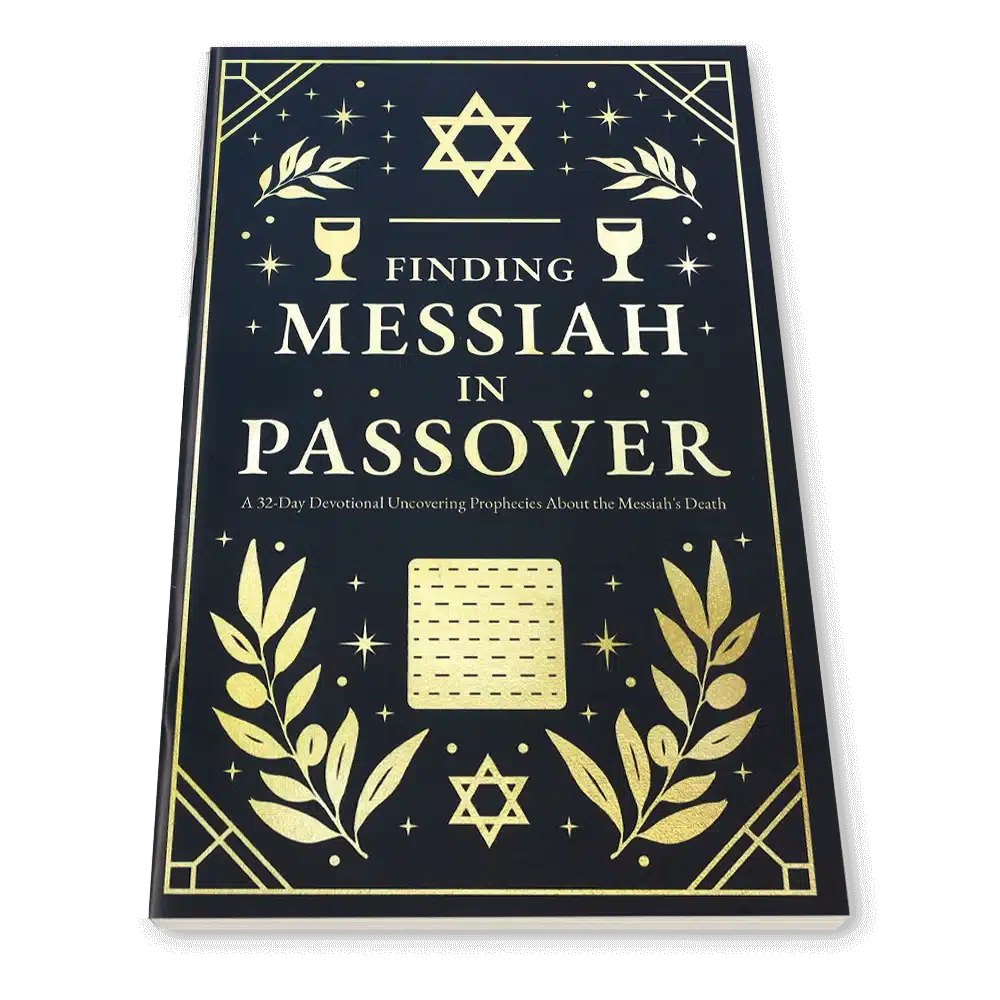
Look deeper into the significance of Passover and Easter with this insightful devotional. Using the Jewish Haggadah as a guide, this 32-day journey explores the redemptive story of Jesus the Messiah.
Jesus celebrated Passover every year of His life! Discover how the Passover traditions foreshadow His sacrifice, and experience a renewed understanding of His love and grace.
Apples of Gold: The Expert
Many arrive at the Western Wall early and read the psalms so fast that no one can understand them. They don’t care about truly knowing God’s Word; they just want to return to their homes as quickly as possible. Upon encountering some of these men at the Wall, Zvi asked them if they knew what they were reading. They called on their rabbi to confront him, but Zvi was not afraid. Listen to find out what happened when he approached them with the truth of Scripture.
Music
The Friends of Israel Today theme music was composed and performed by Jeremy Strong.
Partner with us!
Your financial gift is essential—it ensures we stay on the air, teaching biblical truth about Israel and the Jewish people. If this program has ministered to you, please consider making a gift today.


