


Israel My Glory In Depth: Interview w/ Paul Golden:
 What do King David and MLB Hall of Famer Reggie Jackson have in common? A lot of home runs—and a lot of strikeouts. Metaphorically, David hit some big home runs in his career as God’s faithful and loving servant. But his strikeouts—coveting, adultery, and murder—paint a picture of a sinful and broken man. Our new issue of Israel My Glory magazine studies the weak and flawed figures in Jesus’ genealogy. Paul Golden, The Friends of Israel’s director of Church Ministries, joins the show to share insight from his Israel My Glory article about David’s shortcomings and place of honor in the bloodline of the Messiah.
Though Scripture doesn’t shy away from sharing the messy details of David’s life, it also distinguishes him as a man after God’s own heart, reminding us that our strikeouts are not the end of our story. The prominent list of failures that appear in the Messianic line demonstrates God’s decision to lavish His grace on undeserving sinners and redeem and repurpose them for His glory. Find renewed motivation this week to serve the Lord as you consider how He loves you and desires to use you for His glory despite your sin!
Read "David: The Strikeout King" by Paul Golden.
Steve Conover: Thank you for joining us for The Friends of Israel Today. I'm Steve Conover, executive director here at The Friends of Israel Gospel Ministry. With me is our host and teacher, Chris Katulka. Foiradio.org, that's where you can connect with us. We have over a decade of content on the site that features Chris’ teaching and our amazing interview guests. Again at foiradio.org.
Chris Katulka: Steve, today is our Israel My Glory In-Depth interview, and I'll be sitting down with the director of church relations here at The Friends of Israel, Paul Golden, and he's going to be talking about his latest article, “David: The Strikeout King”, from our March/April issue, Jars of Clay: The Weak and Broken Vessels in the Messiah's Line.
Steve Conover: But first in the news, Israel’s going to Dallas, Texas for the Unicorn Rodeo, a conference branded under the theme “Startup Nation Meets the Scale-Up State,” The conference will bring together U.S. and Israeli government leaders, investors, and entrepreneurs to translate innovation, capital, and policy into tangible economic results.
Chris Katulka: Well Steve, here's my take. As a former Dallas resident, this is a great move. The conference will be focused on AI, health, energy, and defense. As a first-of-its-kind bridge connecting Israel's innovation engine with Texas's powerful business ecosystem. Again, another way to bridge the alliance between America and our greatest ally, Israel.
Chris Katulka: Hi, I'm Chris Katulka with The Friends of Israel Gospel Ministry. I'm an editorial writer for Israel My Glory Magazine and host of the Friends of Israel Today Radio program. Today is our Israel My Glory In-Depth where we look at our most recent issue of Israel My Glory, and we are talking all about Jars of Clay, the Weak and Broken Vessels in the Messiah's Line, our latest issue from our March/April edition of Israel My Glory. In a moment, I'm going to share with you ways that you can get a one-year free subscription to our award-winning Christian magazine, Israel My Glory, if you've never subscribed to it. So stick around for a moment to find out ways you can get your one-year free subscription of either our print or digital edition. With me today is Paul Golden. He's the director of church relations with The Friends of Israel Gospel Ministry, and we're going to talk about his article, David: The Strikeout King. Paul, great to have you with us.
Paul Golden: Thanks for having me, Chris.
Chris Katulka: All right. So you are a big sports fan. In fact, you actually have your own podcast and it's called Post Game with Paul Golden, a sports and faith podcast. Do you want to share about that really quick?
Paul Golden: Sure. For several years, I served as a chaplain for some minor league teams, the Yankees AAA team and the Penguins AHL team. And through that, you meet a lot of Christian athletes and hear their stories. So the podcast is basically interviewing these guys and hearing how either they came to faith in Christ or how they've grown in their faith. And a lot of times it's through failures or storms of life where either God brought them to faith through that crisis of faith maybe, or have strengthened their faith. So that's kind of what the podcast is about. Not so much sports, although that certainly is part of it, but basically their spiritual journey.
Chris Katulka: And so it's no surprise then that your article, David: The Strikeout King, you actually opened with Reggie Jackson's career. How in the world did you seem to fit Reggie Jackson in with King David?
Paul Golden: Right. Well, when Jesse King, our editor of Israel My Glory came to me and talked about, "Hey, we want you to write on David, kind of how his failures, yet he still served as King of Israel and in Messiah's line." So I thought, man, what's a good sports analogy? So I thought, man, of all the strikeouts, as far as the most famous, Reggie Jackson is a guy, 2,597 times he struck out.
Chris Katulka: That's a lot.
Paul Golden: I think if just a nominal fan or maybe someone that did know sports saw that like, wow, someone struck out 2,597 times. What a failure. But yeah, you look at his career, the grand scheme of his career, I mean, he was an all-star 14 times. He won the World Series not once, not twice, but five times. Some incredible records, MVP of the league, two-time World Series MVP. So you look at his whole body of work, you say, what a phenomenal Hall of Fame career, but yet he struck out 2,597 times.
Chris Katulka: Now, a little behind the scenes here at Israel My Glory is that actually you had another sports figure in mind for this.
Paul Golden: I did. I'm a big Yankees fan and a current player-
Chris Katulka: You just lost a bunch of watchers now. You said you’re a Yankees fan.
Paul Golden: That’s right. So hear me out. We're starting the baseball season now for this new season, but John Carl Stanton currently is the all-time strikeout king for current players. And I thought maybe those that would not have known the name would be like, "Wow, how do you even make it to the majors?" But he's probably on track to be a Hall of Famer as well. So anyways, we went with Reggie Jackson because that's kind of a name synonymous with home runs and Hall of Fame career and had a candy bar named after him, but yet he's the all-time leading strikeout king.
Chris Katulka: Now, why do you link that to David though? Make that bridge for us here.
Paul Golden: It's been said, I think Tommy Lasorda said, “Baseball is a game of failure and it's how you deal with that determines your success.” And if anyone knows anything about baseball, you're going to strike out, you're going to fail seven out of 10 times, right? If you only fail seven out of 10 times, you're a 300 career hitter, which is probably a good career, maybe Hall of Fame. So baseball in itself, it's a daily game, it's six months out of the year, it's a grind, and you're going to have failure. So it's how you deal with failure. But yet, despite the failure, a lot of these guys go on to have successful careers and even Hall of Fame. So I thought the analogy when I thought about King David's, his own background, a lot of times we think about obviously Basheba and him killing Uriah, but yet God considers him a man after God's own heart.
So when we look at the whole body of work, not that it's work-based to get to heaven, but when we look at his whole life, despite some major moral strikeouts in his life, God still considers a man after his heart and is in the line of David.
Chris Katulka: When I was growing up, I learned about King Saul, King David and King Solomon. And I learned King Saul bad, King David good and King Solomon, so-so. That was how we learned about the Kings. But if you actually look like what you're saying at the history of King David, King David was, from what he did, was a bad king. Like you said, his failures, they kind of almost outshadow it seems like even what King Saul did. Like you had mentioned, adultery and murder, and that's the kind of thing that could have gotten him kicked out of being the king of Israel. But David's failures, they're very severe. So why do you think Scripture is so honest about the darkest moments of our greatest heroes in the Bible?
Paul Golden: I think those are included just to be an encouragement to us as the reader of the Bible. Because I think a lot of times people think when you listen to someone that's not a believer, you share faith with them and they're like, "Well, you don't know my past. God can never save me. " But then when you start reading both the Old Testament and New Testament, you realize, wow, there's some pretty crazy people. Rahab the Harlot, the prostitute, is included in the hall of faith. Moses murdered someone, but yet God used him to lead the nation of Israel out of Egypt. So you can go just down the line of people throughout Scripture. I think it's a reminder to us that God uses failed human people or human beings that strike out from time to time and God can save you, God could use you despite your failures.
Chris Katulka: Yeah. And that opens up the conversation then for what distinguishes David, a man with serious moral failings from what distinguishes him from Saul who God rejected? He took his Holy Spirit from him, he says. What makes David a man after God's own heart, despite all the strikeouts?
Paul Golden: Despite all that, I think what makes David important and a good example to us is that when he was confronted ultimately with his sin, right? Nathan, the prophet came to him. Obviously he realized he was talking about him. He obviously had a spirit of repentance. And you think of Psalm 55, that's a beautiful Psalm, “create me a clean heart, oh God.” It's really David's laying out his prayer of repentance for what he did with adultery with Bathsheba, killing of Uriah. So I think the fact that it's not how he necessarily started, but it's how he ended that dark period of strikeouts in his life where he realized, "Hey, I'm wrong." And I think because of that, God says, "Hey, you are a man after God's heart. You are trying to do the right thing despite your strikeouts."
Chris Katulka: The other thing too that I find, I like that you brought up Psalm 51 where you had mentioned “create in me a clean heart.” The idea too is that David knows I've sinned against you and you alone. Technically, if you look at what David did, he sinned against Uriah and he sinned against Bathsheba, but ultimately he knows by breaking the relationships that he had with these two individuals, he's ultimately breaking the relationship because he broke the law according to God. But the thing that's amazing to me about David is that he recognizes, I think one of the things that makes him a man after God's own heart too, is the fact that he recognizes I'm the king of Israel, but the king can do anything. He could have gone out and done whatever he wanted. He could have masked whatever he wanted. But instead, he ultimately is saying as the king of Israel, "You are the king, God. I'm just your servant and I sinned against you. " He's actually giving authority back to God and saying, "Against you and you alone have I sinned." He calls him the ‘righteous judge’ so you can cast whatever verdict against me that you wish. So it's interesting to me because I also feel like, and what you kind of pulled out of that too in your article is that David is actually putting himself under God's authority, even though he's the king of Israel and he could have done whatever he wanted without anybody criticizing him as the king. And so he could have masked that murder with Uriah. He could have masked the adultery with Basheba. But what's amazing as we were talking about it being laid bare in the Scriptures, there's not many kings in the ancient world that would actually-
Paul Golden: Admit failure.
Chris Katulka: Admit failure. And yet our Bible lays out the greatest king of Israel's history, King David. The one that every king of Israel is compared to, God basically calls him a man after my own heart and elevates his status even though he sinned the most. Why? Because I believe he said, "God, you're the king. I'm just your servant." I really think that makes a big difference.
Paul Golden: Yeah. And I would add this disclaimer too. I mean, David, the murder, the adultery, even though he sought God's forgiveness in Psalm 51, I believe God forgave him, he still had to deal with the consequences of the sin. There's a good old statement, "You can choose your sin, but you can't choose the consequences of your sin." And David lost a child, he had to deal with the fallout of the adultery and the murder, but yet God still, despite that forgiveness is there, but obviously he had to live with some of the consequences of his choices.
Chris Katulka: And the forgiveness too wasn't just the forgiveness of his sins. It was actually—God kept him in the position of King. When it says here, "Take not your Holy Spirit from me, " it's not that God would remove his salvation, it's actually, the kings of Israel were anointed with the Holy Spirit. So to take away the Holy Spirit means you're taking away my kingship. Just like King Saul, his kingship removed, he took the Holy Spirit away. God did that to Saul. Now King David is getting his, he's saying, "I don't want it removed. Is there any way that you can forgive me even though I have no offering to give you? " Technically what David deserved, which just shows the grace of God, was to be stoned. He committed adultery, murdered. Those are capital punishment—but that's not what happened. In fact, because of his positioning under God and saying, "God, only you can forgive me. I know that you're the one who can forgive me. " He was resting completely on the mercy of who God is and his character and nature.
Paul Golden: Right. You mentioned Saul and David, their relationship. I think it's interesting David and his son, Solomon, I think David, and I can't prove this, but I think David maybe started well, faltered with the three strikeouts right? Adultery, murder.. but yet I think he finished well. Whereas then I look at Solomon, his son, right? David was not able to build the temple. Solomon is, because of who he is, is able to build the temple, he builds his palace. So I think Solomon started well, but then we know his treaties with kings and marrying 700 wives, 300 concubines, those ultimately led him away from God. So I would look at kind of a contrast, David finished well, whereas Solomon started well but didn't finish well. So I don't know if there's a contrast between Saul and David and then David and Solomon, but that kind of stood out to me as I look at that article.
Chris Katulka: Well, we're going to take a quick break and when we come back, we're going to continue talking about your article, David: The Strikeout King. So I'd like our listeners and our watchers to stick around.
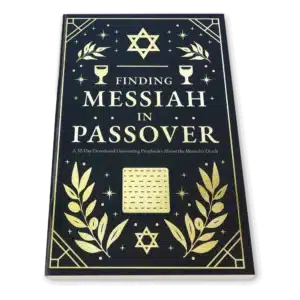
Chris Katulka: I wanted to take a break and share something I really think that you're going to enjoy as we enter this Easter and Passover season. We're excited to share with you a unique devotional looking deeper into the significance of Passover and Easter called Finding Messiah in Passover. Using the traditional Jewish Passover guide, which is called the Haggadah, you'll walk a 32-day journey through the redemptive story of Jesus, the Messiah. People, just remember, Jesus celebrated Passover every year of his life. So I want you to discover how the Passover traditions foreshadow His sacrifice and experience a renewed understanding of His love and grace. This booklet and devotional is affordable and a great way to do worship individually or with your family or with your Bible study group. You can find out more or order your copy of Messiah in Passover, a 32-day devotional, today at foiradio.org. Again, that's foiradio.org.
Chris Katulka: Welcome back everybody. I am Chris Katulka, and with me is Paul Golden, the Friends of Israel's director of church relations. He's also the host of the Post Game with Paul Golden podcast, a sports and faith podcast. And we're talking about King David: The Strikeout King. And Paul, you've been connecting David's story to the bigger redemptive plan of God, ultimately pointing to Jesus, the Messiah. So how does David's inclusion of Jesus's lineage really help shape the way believers should understand grace and restoration?
Paul Golden: Right. That's a good question. I like in 1 Samuel 13, David or Samuel is told ... Yeah. Saul, when Samuel told Saul, he said this, "The Lord has sought for himself a man after his own heart and the Lord has commanded him to be commander over his people. " And then in the New Testament, the apostle Paul in Acts 13 says this about David. He says, "God raised up for them David as king, to whom also he gave testimony and said, ‘I have found David, the son of Jesse, a man after my own heart who will do all my will.’" And I like that because I think it reaffirms before the adultery, the “strikeouts” as we were putting it, but then also after God is putting his stamp of, ‘hey, despite his failures, despite his spiritual strikeouts, he's still a man after my own heart.’
And I think that's a reminder to us and our own spiritual walk that despite failures, I think sometimes we think, oh, this disqualifies me or how could I do this? But yet God is, if we come with a contrite forgiving heart like David did saying, "Hey, please forgive me. " I think God is a God of second chances. Do you remember the old Veggie Tales videos from way back?
Chris Katulka: Yeah.
Paul Golden: There was one I think on Jonah and there's a scene where Jonah comes back to Nineveh after being chased and there's a fun upbeat gospel song, God of Second Chances. And he just keeps saying, God, remember that song? God of Second Chances. And I think that theme is not just in Jonah, but I think of David's life and then so many other characters of both the Old and New Testament that God gave them a second chance.
I think the theme is God is a God of second chance. Many times we think, "Hey, there's no way God gave me a second chance." I'm too far gone that was too wrong or beyond God's reach, but yet God is a God of second chance. I think that theme is throughout.
Chris Katulka: Especially when you think about King David too, I always think King David would've made a great lawyer because in Exodus 34, God shares what his character and nature is. He says, "I'm a compassionate, gracious, merciful, loving, faithful, forgiving God." He literally details us and it shows up all throughout the Scriptures. If you want to know who God is, this is my character and it is bound up in faithfulness, forgiveness, compassion, and grace. And here's King David. King David actually practically quotes from it in Psalm 51 because he knows who God is. He knows that he's the God of second chances.
Paul Golden: It's reminding him of his previous statement.
Chris Katulka: Yeah, he's telling God. He says, "Have mercy on me, oh God, according to your unfailing love, according to your great compassion, blot out my transgressions, wash away my iniquity and cleanse me from my sin." And that is almost as if David was sitting there reading through Exodus 34:6-7 and saying, "God can forgive me despite how horrible my sin is. " But it's because he knew who God was that he could speak so confidently. I think that changes us as Christians when we can confidently know despite our sins that God has the power to forgive us because it's in his character and nature to do that.
Paul Golden: That's true. And a lot of times I think we get down on ourselves because we know what the right thing is, but yet we fail so many times. Yes, I thought of David, and I think this is true of all the kings of Israel. I think in Deuteronomy, they were instructed when a king came into power, right? Yes. He had to personally hand write out his own personal edition, copy of the law. And we can debate whether it was just Deuteronomy or if it was the whole Pentateuch, but certainly he knew, he understood the 10 commandments, but he certainly understood all of God's laws. So David, I'm sure did that. There’s no reason to believe he didn't. I'm sure he had that copy. So he knew it was the right thing to do, but yet he still struck out.
Chris Katulka: He still struck out.
Paul Golden: But as a reminder to us, a lot of times we know the right thing to do. We know what the Bible says about a situation, but yet we do the exact opposite. We rebel, we choose to sin. Yet I think when we come to forgive, God is still there to give us a second chance. He is forgiving. So despite knowing what the right thing to do is, and we still disobey, God is still a loving ... and you talk about jars of clay, he still loves us despite our failure.
Chris Katulka: Yeah, and our brokenness. Well, this has been a great conversation about your article, David: The Strikeout King, but you know what he's remembered for? His home runs, especially we see that in Hebrews 11. He's remembered for his faithfulness to God. And I think even positioning himself, knowing that he, despite being the king of Israel and all the authority's been given to him from God to rule over his people, David still humbled himself and said, "I sinned against you and you alone."
Paul Golden: Reggie Jackson is in the Hall of Fame up in Cooperstown, New York, and yet David is in the Hall of Faith or the Hall of Fame in Hebrews 11. So just like Reggie's in the Hall of Fame, David is still in our Hall of Faith.
Chris Katulka: That's fantastic. Well, thank you so much, Paul, for sharing with us. Hey, listen, I told you, I promised you that I would tell you how you can get a one-year free subscription to Israel My Glory, our award-winning Christian magazine here at the Friends of Israel. And this issue is called Jars of Clay. So if you would like to get this one-year free subscription, all you have to do is go to israelmyglory.org/subscribe. And when you get there, you'll get an option. You can either get a print edition of our magazine or I would recommend our digital edition where not only can you get our most recent issues of Israel My Glory, but also more than 50 years of content right at your fingertips, going back as far as possible in Israel My Glory archives to read about what is going on biblically with Israel and the Jewish people and biblical prophecy as well. So again, don't forget to go to israelmyglory.org/subscribe. Thanks for being with us.
Hey, listen, if you would like to get your copy of Israel My Glory Magazine, it's a one-year free subscription. That's right, one-year free subscription. That's six issues that'll come right to your house. You can have it mailed, our print edition, or I would encourage you to get our digital edition of Israel My Glory, which would give you more than 40 years of Israel My Glory content right at your fingertips on your cell phone, on your tablet, on your computer, all of it by just going to israelmyglory.org/subscribe. Again, that's israelmyglory.org/subscribe, and we'd love to give you a one-year free subscription of Israel My Glory Magazine. Thank you so much for being with us and we'll see you soon.
Steve Conover: Thank you for joining us for today's episode of The Friends of Israel Today. We want to thank Paul Golden for being with us. Don't forget to get your free Israel My Glory trial subscription. Visit our website, foiradio.org. Again, that's foiradio.org. In our previous episode, we looked at the tabernacle and we'll pick up with that series next week. Chris, where are we headed?
Chris Katulka: Yeah, we're going to double up next week. We're going to be looking in the first half at the menorah, the meaning of the menorah. And then just before we get to the Holy of Holies is the incense altar. We're going to talk about that as well and the offerings that were offered at this special place.
Steve Conover: We hope you joined us then. As mentioned, our web address is foiradio.org. Our mailing address is FOI Radio PO Box 914, Bellmawr, New Jersey, 08099. Again, that's FOI Radio PO Box 914, Bellmawr, New Jersey, 08099. You can call our listener line at 888-343-6940. Again, that's 888-343-6940. Today's program was engineered by Bob Beebe. Edited by Jeremy Strong, who also composed and performs our theme music. Our executive producer is Lisa Small. Our associate producer is Sarah Fern. Our host and teacher is Chris Katulka, and I'm Steve Conover, executive director of The Friends of Israel. The Friends of Israel Today is a production of The Friends of Israel Gospel Ministry. Passion for God's Word. Compassion for God's Chosen People.
Watch the Interview
Israel My Glory Magazine
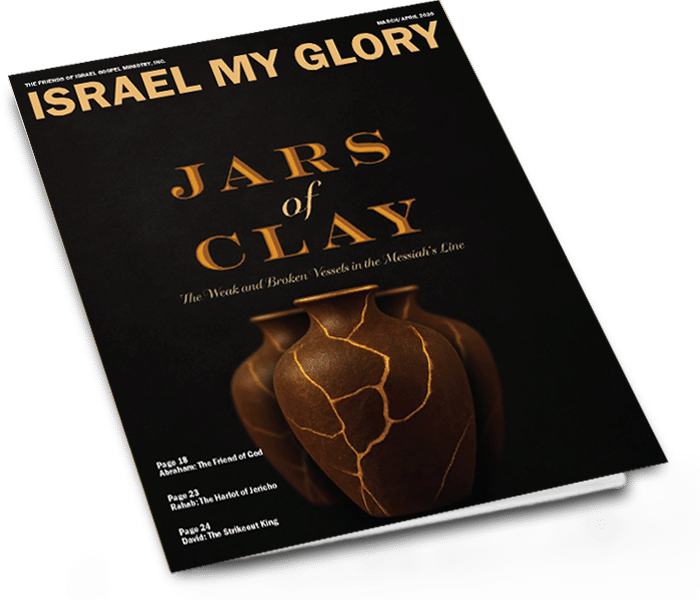
Since 1942, Israel My Glory has been a highly trusted, sought-after tool in the study of God’s Word. This award-winning magazine, published by The Friends of Israel Gospel Ministry, stands firmly on the literal-grammatical interpretation of the Bible. It is simply the best there is if you want to understand Scripture, Israel, and prophecy.
Sign up for your free one-year print or digital trial today!
*First-Time Subscribers Only
Music
The Friends of Israel Today and Apples of Gold theme music was composed and performed by Jeremy Strong.
Finding Messiah in Passover
Look deeper into the significance of Passover and Easter with this insightful devotional. Using the Jewish Haggadah as a guide, this 32-day journey explores the redemptive story of Jesus the Messiah.
Jesus celebrated Passover every year of His life! Discover how the Passover traditions foreshadow His sacrifice, and experience a renewed understanding of His love and grace.
Partner with us!
Your financial gift is essential—it ensures we stay on the air, teaching biblical truth about Israel and the Jewish people. If this program has ministered to you, please consider making a gift today.


