

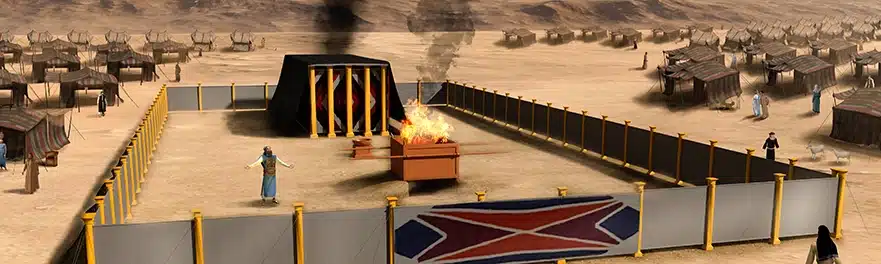
The History and Heart of the Tabernacle, Part 5:
As we continue exploring ancient Israel’s Tabernacle, we pass beyond the altar of sacrifice, the laver, and the table of showbread to find the sacred furnishings in the holy place: the menorah and the altar of incense. The menorah provided light and allowed the priests to minister before the Lord. The altar of incense represented worship continually rising to the Lord God, who is worthy of all praise.
Taken together, the menorah and the altar of incense provide illumination and worship, reminding us that God not only redeems His people from afar, but also brings them near and welcomes their worship in His presence. Through Messiah Jesus, we enjoy the privilege of His light and worshiping before Him as well. Enjoy learning many lessons about God’s desire to be with His people in part 5 of our Tabernacle series!
If you missed an episode of this series, you can catch up in our Archives!
Steve Conover: Thank you for joining us for The Friends of Israel Today. I'm Steve Conover, executive director here at The Friends of Israel Gospel Ministry. With me is our host and teacher, Chris Katulka. Foiradio.org is where you can connect with us. We have over a decade of content and it features Chris Katulka's insightful teaching and his various interview guests. Again, that's foiradio.org.
Chris Katulka: Steve, we're continuing our series as we walk through the tabernacle, kind of like a tour. We entered the eastern area of the tabernacle where we saw the altar, we interacted with the laver, then we entered into the sanctuary where we saw the table of showbread. Well, today we're going to see two things. We're going to look at the menorah and the incense altar, two places of both illumination and worship combined together, and it's going to be a great way for us to see Jesus as the light of the world.
Steve Conover: We're glad you've joined us, but first in the news, global headlines during Palm Sunday read, “Israeli police block Latin Patriarch from Palm Sunday mass in Jerusalem,” after Cardinal Pizzaballa was stopped outside the Church of the Holy Sepulchre while attempting to hold a private service at the site traditionally believed to be Jesus’ crucifixion.
Chris Katulka: Well, Steve, here's my take. This is so misleading. This headline went all around the world. And you know what? What it looks like is Israel is targeting Christians during Holy Week, but again, it's misleading. It's deception. In reality, all holy sites in Jerusalem's old city for Christians, for Jewish people and for Muslims were temporarily closed due to the Iranian missile strikes during the US-Israel war against Iran. With restrictions that were applied to all worshipers purely for safety and not religious targeting. It should also be added that a section of an Iranian ballistic missile landed extremely close to the Church of the Holy Sepulcher where all of this took place.
Chris Katulka: As we continue our journey into the tabernacle, we're now standing inside the Holy Place. But let me recap where we've been because my goal here is to give you a tour of the tabernacle and the temple layout. We entered the tabernacle from the east and almost immediately at the entrance, we encountered the altar of sacrifice in the courtyard. And from there, we've moved beyond to the laver where the priests were washed and made clean for service. And then we entered the sanctuary itself. And in our last episode, we considered the table of showbread where the bread of Presence reminds us that God's covenant people were continually before him, remembered, sustained, and welcomed into fellowship. Now, in this fifth episode, we turn our attention to two more sacred furnishings inside the Holy Place. That's the menorah and the altar of incense. And these two pieces of furniture standing near the veil that separated the Holy Place from the Most Holy Place, the Holy of Holies, teaches us something vital about life in the presence of God.
The menorah speaks of divine light. The altar of incense speaks of prayer, worship, and access. And together, they're going to show us that in God's house, there is illumination and communion. There is light to serve in his presence, and there is a fragrant worship that's rising before him. So let's begin with the menorah, because in Exodus 25, the Lord gave Moses precise instructions for its construction. Unlike the table of showbread, which was made of acacia wood, overlaid with gold, the menorah was crafted entirely with one beaten piece of pure gold. That alone sets it apart. It was not assembled from parts like ordinary furniture. It was hammered out from a single mass of gold, and the craftsmanship would have been extraordinary. It had a central shaft with six branches coming out from its sides, three on one and three on the other, making seven lamps in total.
It was decorated with cups shaped like almond blossoms with bulbs and flowers. Everything about it was full of beauty, design, and life. This was not merely a lampstand in a practical sense. It was a work of sacred art, a golden tree of light standing in the sanctuary. And immediately, we should notice the obvious question. Why was light needed inside the holy place to begin with? Well, the tabernacle had coverings layered over it. It was enclosed and natural light couldn't flood into the sanctuary. So if the priests were going to minister before the Lord, there needed to be light. And that's the first level of meaning. The menorah illuminated the holy place that the priests could serve. Without its light, they couldn't tend to the bread, move within the sanctuary or minister at the altar of incense. In that simple sense, the menorah reminds us that service in God's presence requires divine illumination.
The priests did not generate their own light. The holy place was lit by what God provided. But of course, the menorah means more than that. It's so much more. Its shape is deeply suggestive. It looks like a stylized tree adorned with blossoms and branches. Many interpreters have even seen the menorah as an echo of Eden, and they're not far off at all. In the Garden of Eden, God's presence dwelt with man in such a unique way. There was life, there was beauty, there was fruitfulness, there was unhindered fellowship. The tabernacle in many ways presents a kind of symbolic restoration of sacred space, and the menorah, with its tree-like form and almond blossoms, seems to whisper of life in the presence of God. It's as though a golden tree stands in the sanctuary testifying that the God of Israel is the source of life and light.
The almond tree was also known, this is very fascinating, it was also known as the first tree to blossom in late winter, almost as if it was awake while the rest of creation was sleeping. That is why in Jeremiah chapter one, the almond branch becomes a fitting symbol of God's watching care. See, the Hebrew word for almond sounds like the word for watching. So the message is clear that just as the almond wakes early, God is watching over his Word to fulfill it. God is the giver of life. God is the source of light in the darkness. Its seven lamps also matter. In scripture, seven often carries the idea of completeness, fullness, and perfection. So the menorah doesn't merely offer a little light. It symbolizes the fullness of light. Perfect provision for the ministry carried out in God's house. We're also told that the lamps were fueled by pure olive oil, and this was no ordinary fire lit by random means.
The menorah had to be tended regularly. In Exodus chapter 27, it says that Aaron and his sons were to keep the lamps burning from evening to morning before the Lord continually. So there is both divine provision and priestly responsibility. See, God provides the pattern, the lampstand, the oil, and the calling. The priests are responsible to tend the light faithfully. That matters. The light is sacred, but it must be maintained. Service in the presence of God requires attentiveness. The menorah was not self-neglecting. It required care. And there's something deeply practical here for the biblical understanding of the tabernacle. See, when we enter the courtyard, we see sacrifice. At the laver, we see cleansing. At the table, we see fellowship and provision. And now with the menorah, we see illumination. In other words, life in God's presence is not blind. God's people are not brought near to stumble around in the darkness.
He gives light in his sanctuary. That light is beautiful. It is holy and it's sufficient. And there's another layer still to the menorah. Light in scripture often points to truth, purity, guidance, and the presence of God himself. As the psalmist wrote, "The Lord is my light." See, light exposes what is hidden. Light directs the way. Light gives clarity. Inside the holy place, the menorah silently preaches that God is not a God of darkness. To draw near to him is to come into light. To serve him is to do so by light that he provides. The priestly ministry of Israel took place not in a shadowy confusion, but in the radiance of God's ordered and holy provision. It's also very striking that the menorah stood opposite the table of showbread because on one side there's bread and on the other side, there's light. Provision and illumination, sustenance and sight.
God feeds his people and God gives them light. Those two themes belong together. He does not merely sustain life. He directs it. He does not merely bring his people into his house. He enables them to live there by his own provision. Now, last week, I mentioned that in connection with the table of showbread, Jesus calls himself the Bread of Life—on the one side of the tabernacle. Now, opposite is the menorah. And again, Jesus identifies himself with the candelabra calling himself the Light of the World. He is the One who is truth. He is the one who is purity and guidance and the presence of God himself. Now, when we come back, we're going to turn to the incense altar, so stick around.
Steve Conover: Chris, Psalm 23 is probably one of the most familiar and comforting passages in all of Scripture, but there's a lot of depth we often miss in God's Word.
Chris Katulka: And that's exactly why I love our new video series, Psalm 23: Ancient Hebrew Wisdom for Today. Dan Price, one of our great teachers here at The Friends of Israel, takes you verse by verse through David's most well-known Psalm and really opens your eyes to the richness of the shepherd imagery rooted in Israel's culture.
Steve Conover: In this video, you'll begin to see how personal this Psalm really is, how David's walk with the Lord as his shepherd points us directly to Jesus, our Good Shepherd.
Chris Katulka: And Steve, the companion Study Guide is excellent. It includes Scripture, background insights, and thoughtful questions, making it ideal for personal study, family devotions, or small groups in Sunday school.
Steve Conover: If you're looking for deeper trust and encouragement in your walk with the Lord, I can't recommend this study enough.
Chris Katulka: So you can order your copy of the video series and Study Guide, Psalm 23: Ancient Hebrew Wisdom for Today at foiradio.org. Again, that's foiradio.org.
Chris Katulka: Welcome back everybody. Now let us turn to the altar of incense. We just went through the menorah and what it teaches about divine light. Well, the altar of incense teaches us about worship rising into the presence of God. And see, this altar stood directly before the veil. In the closest place to the Most Holy Place, the Holy of Holies without having to enter into it. In fact, Exodus 30 describes it as a small altar made of acacia wood that was overlaid with pure gold. And it had horns on its corners, much like the bronze altar that was located outside in the courtyard that we saw when we first entered the tabernacle. But see, this altar was smaller and located inside the sanctuary.
And see, its placement is crucial. It stood right before the veil, right before the place where the glory, the presence of God would dwell above the mercy seat in the Most Holy Place. In other words, this altar occupied a place of remarkable nearness. Every morning and evening when Aaron or the subsequent High Priests of Israel trimmed and tended the lamps of the menorah, he was also burning fragrant incense on the altar. This was to be a perpetual incense before the Lord throughout the generations of Israel. Morning and evening, continually, incense rose up before God. It was not occasional, it was regular. It was ongoing and it marked the daily life of worship in the sanctuary. See, just as the bread remained continually before the Lord on the table of showbread and the lamp on the menorah was to be burned continually, so the incense was to rise continually.
The life of the tabernacle was marked by consistency, by constancy. It was to continue on and on and on throughout the generations of Israel. God's dwelling among his people created a rhythm of ongoing worship, light, provision, and prayer. And the incense itself was holy. Later in Exodus chapter 30, God gives a specific recipe for it, a sacred blend that was not to be copied for ordinary personal use. This was not a common perfume. This was holy incense reserved for the sanctuary. And that tells us something very important because see, worship in God's presence is not casual. Prayer and praise are not to be approached as common things. That's what we talked about in our very first episode as we entered into the tabernacle and temple. The distinctions between the things that are holy and common and between the things that are clean and unclean. See, the fragrance that rose from the altar was sanctified. It was holy. It belonged to the Lord. The altar of incense teaches us that worship is precious, set apart and regulated by God's own holiness.
But what did this incense represent? Well, throughout scripture, incense becomes a powerful image of prayer rising before God. Psalm 141 says, "Let my prayer be set before you as incense." Now, that's not a poetic exaggeration. It's actually just basic tabernacle and temple language. The altar of incense gave a visible expression to the truth that the prayers and worship of God's people could be seen rising before him. The sweet fragrance ascending in the Holy Place symbolized acceptable worship offered according to God's design, reaching his presence. It means that in the tabernacle, God not only provided a way for sin to be dealt with and for the priest to be cleansed, he also provided a way for worship to ascend. The altar of incense stands as a testimony that prayer belongs near to the presence of God.
I'm going to say that again. Prayer belongs near to the presence of God. It's placed near the veil for a reason. Prayer reaches toward the throne. Worship rises toward the place where God has chosen to reveal and manifest his glory. And the timing also matters. See, the incense was burned when the lamps were tended. You can read about that in Exodus 30:6-7. Light and prayer go together. Illumination and worship belonged together. There is something fitting about that because see, in God's presence, there is both light to serve and fragrance to worship. The Holy Place was not a silent dead space. It was alive with ministry. Bread stood on the table. Lamps that were shown for the menorah shined light. Incense rose from the altar. The sanctuary was filled with signs that the covenant God of Israel desired communion with his people through really ordained means.
And again, once a year. On the day of atonement, that altar of incense was also tied directly to the rituals of the Day of Atonement on Israel's calendar. Blood from the sin offering was placed on its horns to make atonement for it, to cleanse it. And that reminds us again that even the worship symbolized by incense is connected to atonement. Access to God, prayer before God, nearness to God, none of it is detached from sacrifice. Worship does not bypass holiness. It depends on it. The altar of incense, though golden and beautiful, still had to be touched by atoning blood. And even our highest expressions of worship require cleansing through God's provision. So when we stand before the altar of incense, we are seeing the privilege of worship. We are seeing prayers rising before God. We are seeing the beauty of communion expressed in fragrance. We are seeing that God is made a way not only for atonement and cleansing, but also for ongoing worship in his presence.
See, morning and evening, continually incense rises. That pattern tells us something about the life of God's people. Worship is not meant to be rare. Prayer is not meant to be an afterthought. The altar of incense teaches us that consistency, reverence, and nearness matter. And when we place the altar of incense beside the menorah, the message becomes even richer. In the Holy Place, God provides light and access. He provides illumination and worship, and he gives both clarity for service and communion through prayer. The priests didn't minister in darkness and he does not minister in silence. He ministers in light and he ministers amid the fragrance of worship rising before the Lord. So as we close this fifth episode, the menorah and the altar of incense, you have to be reminded that they stand together as two beautiful witnesses inside a Holy Place. The menorah tells us that the God who dwells among his people is a source of light, life, and holy illumination.
The altar of incense tells us that the same God receives the worship of his people as it rises before him in sweetness and reverence. And in his house, there is light. And in his house, there is prayer. And in his house, there is both holy service and fragrant communion. And together they remind us that the Lord does not merely redeem his people from afar, but that in Messiah Jesus, he brings us near. He gives us light and welcomes us to worship in his presence.
Steve Conover: Now, Apples of Gold, a dramatic reading from the life and ministry of Holocaust survivor, Zvi Kalisher.
Mike Kellogg: I was recently asked to visit a very sick elderly man whose son is my friend. I arrived in the final hours of his life.
He told me he had been a drunk all of his life. “Now that I have reached the end of my life,” he said, “I realize I have never known satisfaction—not from things, people, or even my children. And now I will be lost forever.”
He continued, “The Talmud says, ‘A man does not tell lies on his deathbed.’ I have been bad and drank far too much. I never even thought about my family. And now God will not hear my voice if I call on Him.” I told him, “No, my friend, that is not so. Every cloud has a silver lining, and you can have a silver lining because even now, at the end of your life, you can be saved.”
“Can I be saved after everything I have done?” He asked.
“Yes,” I answered. “The Lord, our Savior, gave Himself for us all so that we can have everlasting life.”
He asked if this was really true. I told him it was indeed true, and I read Isaiah 53:6: “All we like sheep have gone astray; we have turned, every one, to his own way; and the Lord has laid on Him the iniquity of us all.” I then said, “This passage, from our own Hebrew Scriptures, is meant for everyone who comes to the Lord, even if that happens at the very end of your life. All you must do is trust in Him. John 3:16 says, ‘For God so loved the world that He gave His only begotten Son, that whoever believes in Him should not perish but have everlasting life.’”
Surprisingly, this man became peaceful and quiet. When his son came into the room, he asked, “What have you done to my father that he is so quiet and says he is happy?”
When his father related everything he had heard and told his son he believed it, the son was displeased. I told him, “It is my duty, and the duty of every believer, to tell others the truth in their time of need. We are responsible for each other.”
“How can you be responsible for my father?” he asked. “You are not a member of this family.”
I replied, “We have one Father in heaven. As members of His family, we have a responsibility to one another. The Lord said, ‘When I say to the wicked, “O wicked man, you shall surely die!” and you do not speak to warn the wicked from his way, that wicked man shall die in his iniquity; but his blood will I require at your hand’ [Ezek. 33:7]. Are you against your father having such peace from the Lord in his final hours?”
“No,” the son replied, “but I am against you because you spoke with him about a faith he never heard about all through his life.”
“That is exactly the point,” I said. “Even though he had not heard before how to have true faith in the Lord, the Lord will still receive him, and your father is happy because he is no longer lost. You will all have to stand before the Lord one day, just as your father will do very soon. He has
heard the truth about Jesus Christ and has gladly received Him. He is now happy in the Lord, and you and your family can share his last moments with him in happiness.”
This was a thrilling day because this man accepted the Lord as his Savior, but it was also a sad day because his family rejected the Lord. I pray they will accept the Lord soon, before they are on their deathbeds in a lost and hopeless condition.
Steve Conover: Thank you so much for joining us for today's episode of The Friends of Israel Today. Don't forget to order your copy of the video series and study guide, Psalm 23: Ancient Hebrew Wisdom for Today. You can order that at foiradio.org. Again, that's foiradio.org. Today was part five of The History and Heart of the Tabernacle. Chris, where are we headed next week?
Chris Katulka: Yeah, we're going to finish up our series by going into the heart of the tabernacle, Steve. And that is the Holy of Holies, the Most Holy Place where God's presence dwelt, where the arc of the covenant is and where we're going to see God's physical presence.
Steve Conover: Join us next week as we wrap up this series as mentioned, our web address is flyradio.org. Again, that's foiradio.org. Our mailing address is FOI Radio, PO Box 914, Bellmawr, New Jersey, 08099. Again, that's FOI Radio, PO Box 914, Bellmawr, New Jersey, 08099. You can call our listener line. That number is 888-343-6940. Again, that's 888-343-6940. Today's program was engineered by Bob Beebe. Edited by Jeremy Strong, who composed and performs our theme music. Our executive producer is Lisa Small. Our associate producer is Sarah Fern. The late Mike Kellogg read Apples of Gold. Our host and teacher is Chris Katulka, and I'm Steve Conover, executive director of The Friends of Israel. The Friends of Israel Today is a production of The Friends of Israel Gospel Ministry. Passion for God's Word. Compassion for God's Chosen People.
Psalm 23: Ancient Hebrew Wisdom for Today
Psalm 23: Ancient Hebrew Wisdom for Today
One of the most beloved passages of Scripture, Psalm 23 is more than comforting poetry—it’s a timeless testimony of God’s personal care for His people.
This six-session study will guide you through the heart of David’s relationship with the Lord, his Shepherd, revealing profound truths that resonate just as powerfully for believers in Jesus today. Discover how this ancient Hebrew psalm found in God’s Word, offers wisdom, comfort, and assurance for today. It will lead you into deeper trust, reconciliation, and abiding joy in your Shepherd, Jesus Christ.
Apples of Gold: Every Cloud Has A Silver Lining
Zvi visited a friend’s dying father who felt lost and beyond salvation due to a life of alcoholism and neglect of his family. Zvi shared Scripture and explained that through faith in the Lord, the man could still be saved and receive everlasting life even in his final hours. After hearing this truth, the man accepted Jesus the Messiah as his Savior and experienced a sense of peace and happiness before he passed away. Although the man's son was displeased by this, Zvi emphasized the spiritual responsibility to share the truth so that others do not die in a hopeless condition.
Music
The Friends of Israel Today theme music was composed and performed by Jeremy Strong.
Partner with us!
Your financial gift is essential—it ensures we stay on the air, teaching biblical truth about Israel and the Jewish people. If this program has ministered to you, please consider making a gift today.


