

The Shema, Part 4:
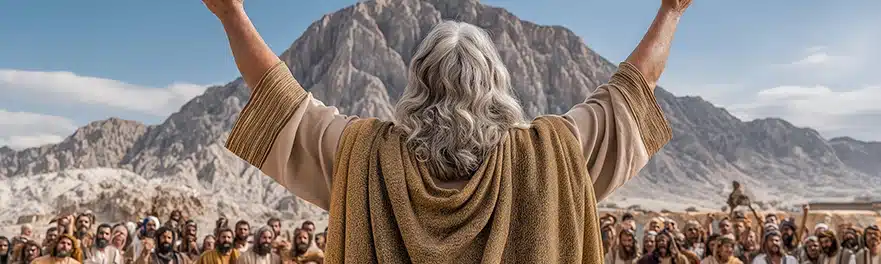
What does it mean to love God with all your strength? It goes far beyond physical power! The conclusion of our series on the Shema and loving God with our whole hearts brings us to the final portion of the command in Deuteronomy 6. The word we read in Scripture translated as “strength” comes from the Hebrew word me’od. Finding practical application for believers, this term indicates that we are to love God with all that we are, at our maximum capacity, creating a love that changes our hearts and actions entirely.
Based on the use of the word me’od, we can conclude several things about our devotion to God. Our love for Him must be a complete, deep, and abiding love. It should be public, costly, sacrificial. And we must emphasize within the Shema that all means all. We must give Him all of ourselves, placing our faith in Him, one that produces true, committed love for the Lord. This was the type of love to which Moses called the Israelites in their covenant with God, which believers in Jesus today should certainly adopt. Learn how to fall deeper in love with the Lord God this week!
If you missed the first three parts of this series, you can find them in our archives.
Chris Katulka: Thank you for joining us for the Friends of Israel Today. I'm Chris Katulka, your host and teacher. Hey, can I ask you a question? Have you been to our website yet, foiradio.org? Hey, this is a great way to connect with The Friends of Israel Gospel Ministry to keep up with biblical teaching about Israel and the Jewish people in a time when the Jewish people need it the most, with antisemitism on the rise and with the criticism of Israel globally. If you want to know what the Bible says about it, I encourage you to go to foiradio.org where we have more than 10 years of radio content, articles and other great interview guests as well. Again, that's foiradio.org. Now, today on our program, we're going to wrap up our series on the Shema looking at Deuteronomy chapter six. We've titled this series, Loving God with Your Whole Heart, the Shema from Deuteronomy 6.
And Shema means “to hear.” “Hear, O Israel, the Lord our God, the Lord is one. And you shall love the Lord your God with all of your heart, soul and might (or strength or might).” And that's what we're going to talk about today. We're going to talk about the might. We've already looked at the heart, the lev. We've looked at the soul, the life, the nefesh. This week we're looking at the might, the me’od. It's going to be a great program as we wrap up our series here on the Shema, to “Hear, O Israel.” But before we get to that, let's look at what's happening in the news.
Next fall, Israel will hold consequential elections for the future of the Jewish state. And President Trump says he will most likely endorse Benjamin Netanyahu, but stop short of a full commitment. In an interview with the Israeli broadcaster, KAN News, Trump said he wants to know more about the other candidates before making his decision official.
Well, here's my take. Israel is at the crossroads. Netanyahu has served as prime minister longer than any other Israeli premier. Many Israelis are ready for change in leadership in their government, but Bibi still has a strong support among Israelis who want to see Israel's enemies dealt with once and for all. Israelis have a deep respect for President Trump, but are they willing to support Netanyahu for another term? Well, we'll have to wait and see.
Chris Katulka: There's a word in the Shema that tends to get the least attention of the three aspects of the Shema that we've been talking about. We've talked about lev, the heart, which draws the theologians. We've talked about the nefesh, the life, the soul that draws the poets. But this third term, this third word, the one Moses adds at the very end of the great commandment here is in some way the most startling of all because it refuses to let love remain in the realm of the interior entirely and it insists on something. It insists that love has an output, that it produces something visible, measurable, costly in the most practical sense of that word. It's the Hebrew word, me’od. And me’od is unusual enough in this context that it has puzzled readers and translators for centuries. And here's the reason why. Me’od is not primarily a noun in Hebrew, it's an adverb.
In the overwhelming majority of its appearances across the Hebrew Bible, me’od means “very” or “greatly” or “exceedingly.” When Genesis tells us that God looked at everything that he had made and saw that it was, remember, “very good,” that word for “very” is me’od. When Abraham is told his descendants will be exceedingly numerous, that exceedingly word there is me’od. The word is designed, me'od is designed to intensify. It presses on whatever it modifies and says more than you can imagine, further than you are reaching, greater than your first estimate even allows it. Me'od. So when Moses reaches me’od in the Shema, “Love the Lord your God with all of your heart and with all of your nefesh, your life, and with all of your me’od, he is doing something that has no clean parallel in English. See, most translations render it “might” or “strength” or “force” and those are reasonable attempts to carry a genuinely difficult word into another language.
But the rabbis who wrestled with this text over centuries heard something more layered in it and their readings are worth sitting with for a moment. The Mishnah, which is a religious book of the Jewish people that is a commentary on the law and a particular tractate that they have called Berakhot. And it asks what it means to love God with all of your me’od. And one rabbinical answer it gives is this. It means to love the Lord your God with all of your possessions, with all of your resources, with all of your wealth. That reasoning is that for some people, their money, their material resources, their practical power they have accumulated in the world is what they hold most tightly to. Their me’od, their muchness, their capacity to act in the world is bound up in what they own and what they can spend. And if that is where your grip is the tightest, then that is precisely what the Shema is claiming for God.
So if your grip is the tightest on your money, then me’od is saying you got to release that to God. Whatever represents your maximum capacity, your fullest resource, your most guarded reserves, that is what love demands. Another rabbinic answer goes even further. Love God with all of your me’od means whatever measure he meets out to you, whether it is good measure or bitter measure, receive it with gratitude. Love him in plenty and in loss. Love him when life is expanding and when it is being stripped away. Me’od in this reading is not just what you have, it is how you receive what comes. The full intensity of life with its gains and its griefs both offered back to God. These readings are not fanciful. They're doing careful work on a word that was chosen very carefully by Moses. See, Moses didn't say “strength” in the ordinary physical sense.
The Hebrew words chayil or koach were available for that. He could have used words that actually were designed for “strength.” But again, Moses used the word, me’od. And that word means something like exceeding or surpassing or beyond the ordinary measure. And what that suggests is that the love the Shema demands is not a love at a comfortable level. It's a love pressed to its limits, a love that spends itself, a love that is not kept the reserve back from God just in case it needs that reserve for something else. Now set this beside two terms that have come before in our series. We've talked about lev, the heart, “Love the Lord your God with all of your heart” is the inner orientation of the whole person, the will, the intention, the place where decisions are made about where your life is actually pointed. To love your God with all of your lev, your heart is to have your center set toward him.
Nefesh, which is often translated “soul", but actually we've talked about this in our previous episode. Nefesh is your whole life. It's the whole breathing, embodied, living self, your life, your appetites, your fears, your actual existence in the world. To love God with all of your nefesh is for that love to reach into the full reality of your embodied life, not just your private spiritual life. And now me’od, might or strength or exceeding capacity is the outward force that love generates. It's what love does when it has truly taken hold of heart and nefesh—lev and nefesh both together, heart and life together. It is a love in motion, love with output, love that shows up in what you do with your resources, your time, your energy, your practical power to act in the world. If your heart is the spring and your life, the nefesh is the river, then you know what the me’od is?
Me’od is where river meets the land and begins to change the landscape. Where all of a sudden flowers are blooming and trees are taking root. This progression is not accidental. See, Moses built the shema, “Hear, O Israel, the Lord our God, the Lord is one. And you shall love the Lord your God with all of your heart, with all of your life, your nefesh, your soul, and also with all of your strength, might. It moves from the deepest interior self, the heart to the outward, the me’od. From the center of self to the whole embodied life, to the full practical force of a person deployed to the world for God. The Shema is not describing three different kinds of love. It's describing love that is complete. Love that has really penetrated all the way through a person and come out the other side as an action.
And see, this is where the distance between religion and relationship, which has been our theme across this entire series, becomes most visible and most practical because me’od is the one term in the Shema that leaves no room for a faith that stays safely inside. See, heart and soul, you might argue, belong to the private self, invisible to others, beyond the external scrutiny that could be out there. But see, me’od does something totally different. Me’od is inherently public. Your resources are public. Your time is public. Your energy, your effort. What you actually do with the practical capacity of your life, the gifts that God has given to you, these are not hidden. Me’od claimed by love for God shows up in the world in ways that can be seen. And Leviticus actually understood this. The sacrificial system, it wasn't free. It cost something. The animal brought to the altar was property.
It had value. It could have been sold or eaten or even kept. The tithe was a real portion of real income surrendered to the service of the tabernacle. The various offerings of grain and oil and wine were resources, time and labor. All of it converted into what? Worship. Leviticus was never a purely spiritual exercise. It had a me’od dimension built into it. The commandment to love God expressed through the practical surrender of material resources, tangible capacity and measurable output. But again, as we've seen through this series, the form could be maintained without the reality. You could bring the required offering without bringing your me’od in the sense the Shema intends us to. You could calculate the minimum requirement and give exactly that because the law specifies and you are compliant with the law. And that kind of giving, precise, calibrated, never exceeded what is required.
This is the signature not of love, but of management, of keeping accounts of staying in good standing at the minimum necessary cost. That's called a transaction. That's not devotion. Me’od by its very nature as an intensifier rules that out. It does not point to the minimum. Me’od points to the maximum. To the place past comfortable, past calculated, past what you would have given if you had set down and worked out what you could afford. See, the rabbis heard this. The word they sometimes used in connection with me’od was even your life itself. Even that, even the last thing that you would ordinarily surrender, love pressed all the way to the end of what you have. And this connects the Shema in a thread that runs through all of Scripture to what the New Testament will call sacrifice of a very different and final kind. See, the logic that runs from me’od to the cross is not actually that hard to trace.
And when we come back, we're going to see how this thread runs from the Shema to the cross. And so I want you to stick around for that. We'll be right back.
Steve Conover: How we understand the Bible really matters. And a big part of that is how we view Israel in God's plan.
Chris Katulka: Yes, Steve, exactly. And Israel plays such an important role in the Scriptures and that's why at this year's Friends of Israel's PROCLAIM Conference, we're going to be looking at A Biblical Case for Zionism. We're going to be asking a crucial question. Why should Christians care about Israel today? Because see, how you view Israel actually impacts how you understand all of Scripture.
Steve Conover: And I'm excited about this conference because it isn't just about current events or politics.
Chris Katulka: No, actually it's all about God's promises. See, if God keeps his promises to Israel, we can trust him to keep his promises to us. And that's why this issue matters so deeply, not just for us here at Friends of Israel, but for every believer.
Steve Conover: It truly comes down to knowing God, rightly knowing his Word and responding to what he loves.
Chris Katulka: And that's why we want you to join us as we study A Biblical Case for Zionism, July 17th and 18th in Winona Lake, Indiana, August 14th and 15th in Lancaster, Pennsylvania, or October 16th and 17th in Richmond, Virginia.
Steve Conover: If you've missed those dates, don't fear. You can find out more about our PROCLAIM conferences and check those dates at foiradio.org. Again, that's foiradio.org.
Chris Katulka: Welcome back, everybody. We are wrapping up our series now on the Shema, “Hear, O Israel.” That's what Shema means, to “hear.” “Hear O Israel, the Lord our God, the Lord is one. And you shall love the Lord your God with all of your lev, your heart, your nefesh, your life, your soul, and with all of your me’od, with all of your strength or your might.” And God says to love the Lord your God with all your heart and soul and me’od, and you're everything.You're very self. You're very actually. That's what my me’od means. You're “very.” And we're seeing how that thread runs from the Shema in Deuteronomy 6 all the way to the cross. See, when Paul writes to the Romans that God demonstrates his own love for us that while we were still sinners, Christ died for us. He is describing, the Apostle Paul is describing me’od love.
Love that spent everything, that held nothing in reserve, that pressed all the way to the farthest possible limit of what love could give. The Father sending the Son is the ultimate me’od, the exceeding, the surpassing, the beyond all ordinary measure, gift of God who commands this love now himself enacting it at the highest possible cost. But before we get there, we're still with Moses on the plains of Moab here in Deuteronomy chapter six. And Moses is looking at a people in Deuteronomy who have consistently loved God with some of their heart, with some of their life and carefully managed portions of their resources. Who have followed, but not all the way. Who have trusted, but kept a hand on the emergency exit. Who have worshiped, but always with a reservation tucked away, a hedge against the possibility that full surrender might leave them exposed. And he calls them and he calls us to me’od. To love that does not keep a reserve. To the giving that has calculated not what is safe to release, but what is available and released it all. To the life deployed fully for God, not strategically partialed out between God and the competing claims of our self-interest and security and the quiet anxieties that whisper that you can't really afford to love like that, like me’od.
This is why the Shema is not a simple prayer. It's the most demanding thing ever said to a human being in a handful of words—heart, lev, every intention reoriented. Nefesh—life, every breath surrendered. Me’od—every resource, every capacity, every last measure of what you have and you are and you can do in this world, given over. Nothing withheld from the One who made you, redeemed you, sustained you and now asks for all of it, not as a tyrant extracting some tribute, but as a God whose own love for you was also, as it turns out, without reserve. We began this series on the Shema with a question about distance. The distance between Leviticus and Deuteronomy is the distance that can feel like between religion and relationship, between a covenant kept outwardly and a covenant loved inwardly. And what we have found as we have followed Moses through the Shema here, is that the distance is not about discarding the external.
It's about inhabiting it from the inside out. The practice of faith is not replaced by love. It's produced by love. It grows from the heart, the lev, that has been rightly set through the nefesh, the life, that has been fully surrendered and out into the world as a me’od, the strength, the might, the practical, visible, costly, exceeding force of a life that has decided with everything it has to love God and to show it. This is what Moses saw that Israel needed. This is what the prophets would weep for when they watched the generations fail it. This is what was promised when Jeremiah speaks of a new covenant with the law, not written on tablets, but on the heart. And Ezekiel speaks of a new spirit within the very capacity to love with the heart, the lev, the nefesh, the life, and the me’od, the might, given as a gift by God who commanded it because he knew we would not manufacture it at all by ourselves.
The stone tablets were always pointing here, but they couldn't produce. This is why we needed the New Covenant so that we could place the law of God, the commands of God, the Shema of God, where on our hearts, to the whole self, to the last full measure of everything that we are and we have pressed out in love toward the only One worthy of receiving it, Jesus, the Messiah.
Steve Conover: Now Apples of Gold, a dramatic reading from the life and ministry of Holocaust survivor, Zvi Kalisher.
Mike Kellogg: Not long ago, one of our Jewish neighbors invited me to visit him at his home. I gladly accepted, since I had been waiting a long time for this invitation so I could share with him about faith in Christ.
He and his wife received me warmly, and my neighbor asked, “Do you know why I invited you?” I answered, “Because we are good neighbors and friends.”
“No,” he said. “I invited you to listen to one of our great rabbis preach on television about Shabbat [which is the Sabbath].”
He even invited some of his Orthodox friends so he would not be alone when he needed to answer my questions. The rabbi spoke about prayers, which books people must have, and which prayers God receives best. I listened for two hours. My neighbor and his friends thought they had put me in my place since I was silent. Finally, they began to ask me questions. “What do you have to say about all you have heard?” one asked.
“What I have to say is written in Ecclesiastes 1:2: ‘Vanity of vanities, all is vanity.’”
“How can you say such a thing?” he asked with surprise. “He is a famous rabbi. And what you say is ‘vanity’? Of course, you do not pray! You do not even have a prayer book!”
“Did our great prophets pray using your prayer books, or did they pray from the depths of their hearts? God heard their prayers. My faith is in the Lord, who hears us when we pray from our hearts. I do not trust in what men say about prayer, no matter how famous they are,” I said.
One replied, “You are telling us what you have learned from this Christian book, the New Testament, where it is written about This Man, Jesus!”
I replied, “How blind you are. You do not even know where it is written that we should pray with our hearts.” So I opened my Bible and read to them from Deuteronomy 6:5–6: “You shall love the LORD your God with all your heart, with all your soul, and with all your strength. And these words which I command you today shall be in your heart.”
They looked at each other with great shame. But they did not give up trying to convince me I was wrong. One man replied, “But those who believe in This Man, Jesus, have strayed from the Bible.”
I showed them my Bible, consisting of both testaments in Hebrew. They were extremely surprised that we who believe in Christ read the Bible. After a few hours of discussion, several of the men wanted to know how I came to know the Lord.
I told them it was because I read the Bible only, not a big stack of other books. They became angry and started shouting there was no way I could believe in Jesus by reading the Hebrew Scriptures. So I opened my Bible to Isaiah 53 and read it to them. They asked why I was reading from the New Testament. I showed them I was reading from one of Israel’s major prophets. They looked at my Bible and began to read Isaiah 53 for themselves.
“We will have to ask our rabbis about this,” one said. “But you believe in This One who was born in Bethlehem. Where is it written that God was to be born in Bethlehem?”
I told them to look in my Bible and read Micah 5:2: “But you, Bethlehem Ephrathah, though you are little among the thousands of Judah, yet out of you shall come forth to Me the One to be Ruler in Israel, whose goings forth are from of old, from everlasting.”
After this they were all quiet. Pray God will help them to see with their hearts and understand that Jesus is God––and that He loves them.
Chris Katulka: Thanks again for joining us for today's episode of The Friends of Israel Today. Again, we would love for you to join us at one of our PROCLAIM Prophecy Conferences where you'll be equipped to give a biblical case for Zionism. You can find out more by going to foiradio.org. As we close, I'd like to thank our radio team: executive producer, Lisa Small, associate producer, Sarah Fern, engineer Bob Beebe, program editor, Jeremy Strong. Apples of Gold was voiced by the late Mike Kellogg and Steve Conover is the executive director of The Friends of Israel and I'm Chris Katulka, your host and teacher. The Friends of Israel Today is a production of The Friends of Israel Gospel Ministry. Passion for God's Word. Compassion for God's Chosen People.
PROCLAIM Conference
PROCLAIM Conference
Why Should Christians Care about Israel Today?
In an age of rising antisemitism, this question has never been more pertinent.
Join The Friends of Israel Gospel Ministry as we examine The Biblical Case for Zionism. Each message will explore a different section of Scripture to show how the Bible overwhelmingly supports Zionism—the idea that we should love the Jewish people and support the modern state of Israel.
We invite you to come eager to learn and trust you will leave with a renewed confidence that God’s people should love whatever God loves—and that includes Israel.
Apples of Gold: "The One Born in Bethlehem"
Zvi was eager to visit a neighbor’s home, hoping for an opportunity to share his faith. However, the invitation was a ruse; he found himself surrounded by locals attempting to disprove the messiahship of Jesus. During two hours of listening to a rabbi preach on television, Zvi remained quiet. While the others mistook his silence for defeat, he was simply practicing the wisdom of James 1:19b: being quick to listen, slow to speak, and slow to anger. Join us as we hear how Zvi used the Hebrew Scriptures to defend the deity of Jesus.
Music
The Friends of Israel Today theme music was composed and performed by Jeremy Strong.
Partner with us!
Your financial gift is essential—it ensures we stay on the air, teaching biblical truth about Israel and the Jewish people. If this program has ministered to you, please consider making a gift today.


